Joseph Stiglitz Quotes
Obama had to save the banks, sure, but he didn't have to save the bankers and the shareholders and the bondholders. We broke the rules of capitalism in order to save those at the top - as we always do.
Stiglitz, Joseph E. Freefall: America, Free Markets, and the Sinking of the World Economy. W. W. Norton & Company, 2010.


This was written in 1933 one of the worst years of the Great Depression. Actualy many upper middle calss and rich people were ruined themselves by the Great Depression, but at the same time the ultra rich were living in a "gildd age" and reveled ostentatiously.

The same greatest issue was still before the people a century later. See {633217} , {635104} & {630538}.


Rich people the world over have often sought a safe way to save their money. Unfortunately, in most counties of the world, there is not the rule of law and the limited government that is in the United States and a few other industrial democracies. So the rich of those countries will often avoid investing their money in their own country and instead invest it in the United States or another “safe” country. This lack of patriotism makes development of poorer countries that much more difficult. However, the rulers of those countries rarely do the things necessary to create a reasonably safe environment for investment. Even in America, some wealthy people will invest in other nations or “bet against the dollar” in favor of the Yen, the Swiss Franc or the Euro. During the American Revolution and the War of 1812, there was every reason for wealthy Americans to send their money to England for investment or banking there, However, most American wealthy families were patriotic enough not to maximize their personal income.


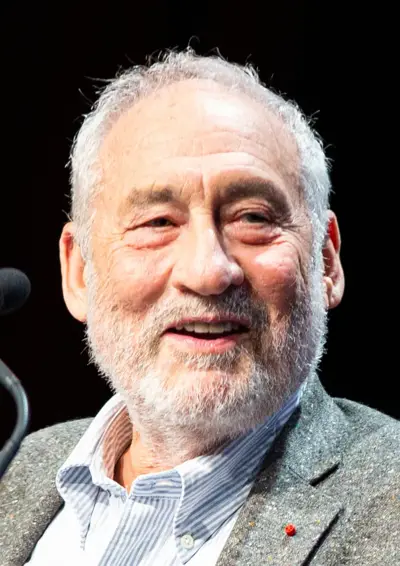
Joseph Eugene Stiglitz is an American economist, public policy analyst, and a professor at Columbia University. He is a recipient of the Nobel Memorial Prize in Economic Sciences (2001) and the John Bates Clark Medal (1979). He is a former senior vice president and chief economist of the World Bank and is a former member and chairman of the (US president's) Council of Economic Advisers. He is known for his support of Georgist public finance theory and for his critical view of the management of globalization, of laissez-faire economists (whom he calls "free-market fundamentalists"), and of international institutions such as the International Monetary Fund and the World Bank.
