Herman Kahn Quotes
Nuclear weapons are intrinsically neither moral nor immoral, though they are more prone to immoral use than most weapons.
Kahn, Herman. Thinking About the Unthinkable in the 1980s. Simon and Schuster, 1984, p. 34.


The article showed how a nuclear bomb worked. The Government attempted to suppress the publication by getting a Federal court injunction. Day and others claimed the article was based on public sources. It was. The U. S. Court of Appeals lifted the injunction and the article was published.

One new danger that nuclear powers add to the usual problems of conflict, is that a nuclear power, about to lose a war in a humiliating way, might just use his nuclear weapons in revenge. So much damage will be done that the victory turned out to have been a bad thing. So ironically, with a nuclear enemy. Your military dare not win to dominantly with conventional weapons.


The Scientific Project that developed the Atomic Bomb. Oppenheimer was the great physicist who directed the successful development of the atomic bomb so as to build the weapon before Hitler did in World War II. However, as the technology evolved, he had doubts as to the wisdom of creating even more powerful hydrogen weapons. His viewpoint was hurting the administration’s policy of rapid unlimited nuclear weapons development, and he was the victim of a character assassination whereby his security clearance was withdrawn. The “father” of the atomic bomb was the first American casualty of atomic weapons development.

At the time Iran was claiming that its nuclear program was for atomic energy only.


The President had asked for the views of the Joint Chief’s of Staff. At the time, the major U. S. defense doctrine depended on our nuclear deterrent which if used against the Russians would have meant mutually assured destruction since they had enough of a nuclear arsenal to destroy America as we know it.


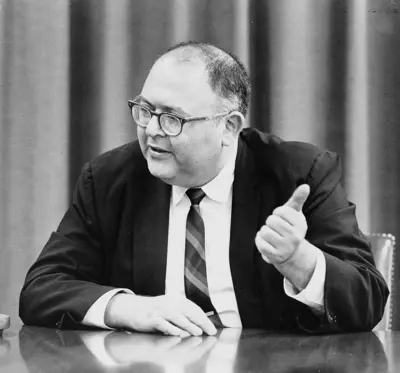
Herman Kahn was a founder of the Hudson Institute and one of the preeminent futurists of the latter part of the twentieth century. He originally came to prominence as a military strategist and systems theorist while employed at the RAND Corporation. He became known for analyzing the likely consequences of nuclear war and recommending ways to improve survivability, making him one of the historical inspirations for the title character of Stanley Kubrick's classic black comedy film satire Dr. Strangelove.
