Tertullian Quotes
Now then, you dogs, whom the apostle puts outside and who yelp at the God of truth, let us come to your various questions.
Tertullian. "Against Marcion." Ante-Nicene Fathers, Vol. 3, edited by Alexander Roberts et al., Christian Literature Publishing Co., 1885, p. 309.


He was officially hanged for his offence of making this statement on January 8, 1697. His execution, which raised considerable concern, was the last execution for blasphemy in Britain.


Whoever teaches differently from what I have taught, … condemns God and must remain a child of hell.
Humility and doubt were not characteristics of Martin Luther.


This is a very interesting quotation for it is a stark illustration of a difference between science and many religions that exists, albeit to a lesser extent. The Church fathers had decided that astrologers and alchemists were in league with the Devil and therefore were to be avoided and not heeded. But Augustine clearly tells us that this is so, even of the astrologers / alchemists were right and had the truth. To the scientist the truth trumps all else. To Augustine, avoiding contamination with the Devil—heresy—is more important than learning the truth. The same sort of logic has been a part of much political culture. When the Communists would decry American Racial discrimination, much of the society claimed that, their ideas should not be considered. Communists were evil and to be shunned—even if they were right about a particular area. To the Tea Party of the early 21st century, elite liberals were to be shunned and discounted even if they sometimes had the truth on their side. The origin of the thinking is with Saint Augustine.

Spinoza’s ideas were considered so radical and dangerous that he was the only man in history who was excommunicated by the Catholics, the Jews and the Muslims.


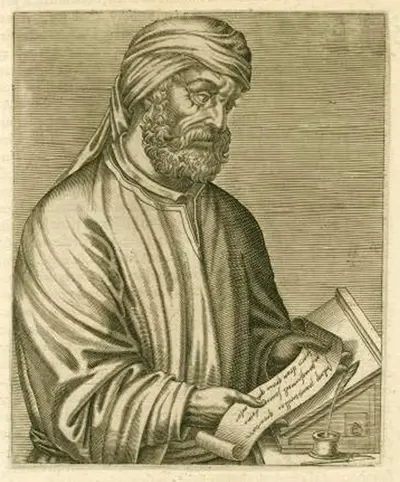
Tertullian (/tərˈtʌliən/; Latin: Quintus Septimius Florens Tertullianus; c. 155 – c. AD 220) was a prolific early Christian author from Carthage in the Roman province of Africa. Of Berber origin, he was the first Christian author to produce an extensive corpus of Latin Christian literature. He was an early Christian apologist and a polemicist against heresy, including contemporary Christian Gnosticism. Tertullian has been called "the father of Latin Christianity" and "the founder of Western theology."
