Aaron David Miller Quotes
Nobody ever lost any money betting against Arab-Israeli peace
Aaron David Miller, Department of State Middle East Advisor & Negotiator, PBS News Hour, April 1, 2014
Sourced by: Eigen's Political and Historical Quotations


A major issue amongst Israeli’s is to how they should relate to those hostile Islamic nations in their area who claim they are at war with Israel or the Jewish People. This position in effect says that the oratory of those Islamic groups that claim that they are in a war—a holy war even—should be taken at their word and treated as a wartime enemy and Israel should actively attempt to kill and destroy them.

The Palestinians were split between supporters of Hamas and Fatah. The former was a terrorist organization which refused to recognize the right of Israel to exist and whose charter called for the killing of all Jews. The latter, accepted the right of Israel to exist and was committed to peace and coexistence with the Jewish state. They had fought a civil war and Hamas controlled Gaza with well over 1 million people which they seized for force and killed of forced out Fatah Representatives. Fatah was the elected ruling party of the West Bank, the larger and more populous of the Palestinian territories. There was little chance of any peace given that split. However, Israel which had undergone over 7000 rockets fired upon them by Hamas, stated that they refused to negotiate with the Palestinians as long as the Hamas terrorists were a part of the control of the potential Palestinian state. They would only discuss a 2 state solution if Hamas agreed that they accepted the right of Israel to exist in their general territory as a Jewish State, Hamas would accept and follow previous agreements made with the Palestinians, and Hamas would give up terrorism and the objective of killing Jews. So either Hamas would have to change its policies or Israel would negotiate with an organization that claimed it would never accept the existence of that country as a Jewish state. Al-Masri thought that the agreement he had mediated, was a necessary first step and was constructive for all the parties.


At that time the Israelis had been rebuffed after offing several major peace proposals and most were convinced that the Palestinians were so fractionated that no one would dare sign a peace even giving Palestinians their own state and sharing Jerusalem as the capital. So they just organized around security needs and walling Israel off from terrorist attacks while maintaining the occupation until something radially changes amongst the Palestinians. The Palestinians and the other Arabs did not want to negotiate either as they felt so weak that they believed they could never get decent terms, and they hoped for some military or terrorist victories where the Israelis would make large concessions to a strong opponent. At the same time there were a few ultra-orthodox Jews who did not want a peace and wanted to do what conquering nations had done throughout history—annex more conquered territory. There were a number of Arab groups, in addition to some Palestinians who did not want a peace at all, as for them there was no satisfactory solution so long as there was a Jewish state in their midst. See {632822} for more on the Israeli attitude then.

This was one of the most accurate foreign policy assessments ever made. The next year the first Arab-Israeli war began when the state of Israel came into being. See {624566} for another accurate prediction.


The Arab nations have not reformed their autocratic, dictatorial, rule; have not developed their economies, and are amongst the most corrupt nations on earth. Khalef and others believe that the leadership of the Arab nations have perpetuated the Arab Israeli conflict so that their populations would focus on that and not on the lack of any reasonable progress despite much international aid.


The Temple Mount in Jerusalem is the base on which the Great Jewish Temple was erected. The temple was destroyed by the Romans. Hundreds of years later the Muslims built a mosque which the Prophet Muhammud himself is believed to have transported to. One side of the Temple Mount is the Wailing Wall, the holiest place on Earth for Orthodox Jews. When the Arabs controlled Jerusalem, they would not allow any Jews to pray at the Wailing Wall. When the Israelis gained control of the holy city they were more reasonable. They ceded day to day control of the Temple Mount—the top and the Mosque—to the Muslims and since then Jews have prayed at the side of the Mount and Muslims on the top. However there has been some friction about the archeology of the interior of the Mount itself. And some Muslims resent the fact that Israel controls the security and access to one of their holiest Mosques, and that in the event of some transgression in the Mount, Israeli civil law controls and not Islamic religious law—Sharia. Some permanent agreement will have to be made if there is to be an overall peace.

At that time the Israelis had been rebuffed after offing several major peace proposals and most were convinced that the Palestinians were so fractionated that no one would dare sign a peace even giving Palestinians their own state and sharing Jerusalem as the capital. So they just organized around security needs and walling Israel off from terrorist attacks while maintaining the occupation until something radially changes amongst the Palestinians. At that time there was little point to most Israelis to debating terms of a peace treaty as the odds of ever getting one in the next couple of years were about the same as their going to Mars.


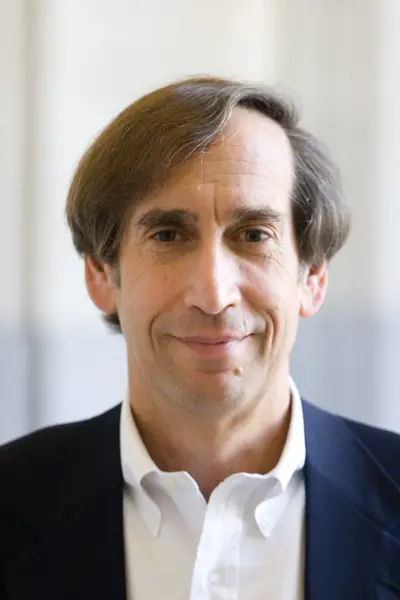
Aaron David Miller is an American Middle East analyst, author, and negotiator. He is a senior fellow at the Carnegie Endowment for International Peace, focusing on U.S. foreign policy. He previously was vice president for new initiatives at the Woodrow Wilson International Center for Scholars, and has been an advisor to both Republican and Democratic secretaries of state. He is a Global Affairs Analyst for CNN.
