Mark Twain Quotes
No throne exists that has a right to exist, and no symbol of it, flying from any flagstaff, is righteously entitled to wear any device but the skull and crossbones of that kindred industry which differs from royalty only businesswise-merely as retail differs from wholesale.
Twain, Mark. Mark Twain's Notebook. Harper & Brothers, 1935.


In a Chicago labor demonstration at the Haymarket a bomb killed several policemen. Fisher and his colleagues were anarchists who had printed a pamphlet the previous day advocating the demonstration and urging violence against the authorities in retaliation for the police-caused death of demonstrators the day previous. When the police were killed, Fisher and his colleagues were arrested, tried, and convicted of murder even though they were not even present at the scene. Several, including Fisher, were hanged before Governor Altgeld commuted the sentences of the other Haymarket “conspirators.” See {43713}


The term “class warfare” was in the early 21st century used by conservatives whenever anyone criticized the rich or advocated raising taxes on the rich. These conservatives had little concept of what class warfare really is and was. This quotation illustrates the real class warfare which existed on a few occasions in American history.

This is a fascinating historical quotation. Karl Marx and Friedrich Engels wrote The Communist Manifesto in 1848 in England and in less than 40 years, American politicians were already in fear of the doctrine. Communism had one of the fastest spreads of any ideology. By 1886 we already see the beginnings of a Red Scare. At the time, most laws were designed to protect the wealthy and the middle class, and many discriminated against workers and the poverty stricken.

Hunting and fishing had been much restricted to aristocrats for whom it was a sport. But for common people it was part of subsistence. Just like so many corporations and wealthy people end up paying lower tax rates than the average person in modern American society, in Holland then it was the aristocrats who paid little or no taxes. And much of the tax revenue went to provide them with an opulent lifestyle. Ending their tax exemptions and their subsidies, would lower taxes on everyone else. And democracy would give the people control over the government. Daendels had in earlier years fled to France when his first Dutch revolutionary efforts failed and he had a price on his head. He was in Paris during the French Revolution and was an enthusiastic supporter. For his support and with his military experience not associated with royalty, he was made a General of the Revolutionary French Army. When the Dutch Patriots tried again to revolt, the new French Government took their side and sent Daendels to Holland at the head of a small French Army to protect the Patriots. This was his position when he issued this proclamation to the great distress of William V and his supporters.

This unusual quotation was made to historian Ron Radosh. before Bnnon qA ppoibnrws to a critical position in government by Donald Trump. It is not known if Trump was aware of the radical thinking of this man who was joining a conservative, republican Administration in a national security role.


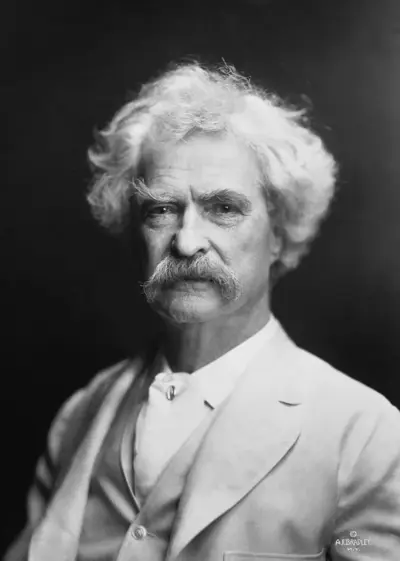
Samuel Langhorne Clemens, known by his pen name Mark Twain, was an American writer, humorist, entrepreneur, publisher, and lecturer. He was lauded as the "greatest humorist the United States has produced," and William Faulkner called him "the father of American literature". His novels include The Adventures of Tom Sawyer (1876) and its sequel, the Adventures of Huckleberry Finn (1884), the latter often called "The Great American Novel".
