Floyd Abrams Quotes
No other country in the world gives protection like that, but it is not absolute protection. People sometimes meet that high burden and win libel suits, and in those cases I think they ought to win.
Abrams, Floyd. Interview with Charlie Rose. Charlie Rose, PBS, 21 Apr. 2005.


Usually Jefferson was the strongest voice for rights with no loopholes. However, he wanted to have a slander exception as this quote shows. However, the issue is what happens if a government official or an agency believed that it has been falsely slandered? If Jefferson’s proposal was accepted completely, the government and officials could sue someone who published negative information that they thought was false. Our supreme court has limited the exception to private parties who were NOT “public figures” unless the publisher knew the information was false and proceeded anyway for malicious reasons.
England and most other countries do not have such an exception and the press is very timid about criticizing the government or officials lest they make a mistake .
The word “printer” had a slightly different meaning then. In Jefferson’s time the printer was also the publisher, Benjamin Franklin was known as a printer but he not only published material but wrote much of it himself. This was typical. So Jefferson is concerned with the rights of the printer, the publisher and the writer.

This law would certainly be held unconstitutional today but at the time it wasn’t even clear that the Supreme Court could nullify a law of Congress. Virginia and Kentucky both passed resolutions however, protesting the law and challenging its constitutionality. The $2,000 maximum fine was huge for the day—the equivalent of more than $1 million today. The reason was that one of the major targets of the law was wealthy printers and publishers, who could be impoverished for a violation. The Sedition Act was in existence until Jefferson ousted the Federalists who passed it (John Adams signed it) and pardoned all those who had been convicted under the law. The Sedition Act is used today as evidence that the Founding Fathers really did not intend that the First Amendment protect speech that is potentially harmful to the country. The counter argument is that the Sedition Act was passed by John Adams and his allies at a particularly vulnerable time in America’s early history. And it was one of the biggest reasons that Adams and the Federalists were defeated after a single term by Thomas Jefferson and the Democrats. The Federalists were so badly beaten that their entire political party was destroyed. The Whig Party evolved as the opposition Party to Jefferson and the Democrats.

The libel and slander laws in England were then, and are today, dramatically different from those of the United States in two fundamental ways: In America truth is an absolute defense; in England you can’t say true things about people which are personally libelous. Second, in America politicians and public figures are not entitled to a verdict even if the statements are inadvertently or possibly false. Without the Constitutional protections of freedom of speech and freedom of the press, the reputations of people including public figures are given much more weight in England than in America.


Samuel Langhorne Clemens, 1835-1910. Grant was the victim of more journalistic errors than most politicians as a number of his appointees turned out to abuse their position for their own gain. Often, Democratic leaning newspapers would claim the Grant was aware of the corruption, sharing in it or both, When there was later proof of Grant’s non involvement, most newspapers would never publish a retraction of correction.

This distinction is the basis for the Supreme Court Decision in New York Times v Sullivan where they ruled that the libel of a public figure is not to be punished unless it was malicious and not just defamatory. In England, a person can be sued for slandering a politician. Worse, truth is not an absolute defense in a libel suit in England as it is in the United States.


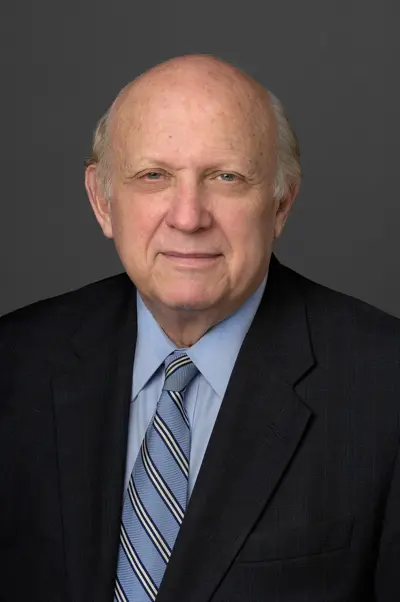
Floyd Abrams is an American attorney at Cahill Gordon & Reindel. He is an expert on constitutional law, and has argued 13 cases before the Supreme Court of the United States. Many of the arguments in briefs he has written have been adopted as United States Constitutional interpretative law as it relates to the First Amendment and free speech.
