Ginni Rometty Quotes
No negro or Indian though baptized and enjoyned their own freedome shall be capable of any purchase of Christians but yet not debarred from buying any of their owne nation
Virginia, Law, 17th Century
Sourced by: Eigen's Political and Historical Quotations

This quotation explains why so many of the Southern poor so actively supported the racist Slavery system even though they could not afford slaves and received no direct benefit from slavery or the discrimination against free Blacks. The poor were not at the bottom of the totem pole, and therefore had a dignity and social status, that the poor in a racially integrated society never possessed.

Billy Sunday was the most famous preacher of the day. Unlike the vast majority of white preachers, he not only preached to black audiences but exuded an atmosphere of friendliness and comfort around Blacks that amazed most. Most Black leaders thought Sunday was very good for race relations, but there were some clergy like Grimke who criticized him. Sunday was castigated by many racist whites for preaching to Blacks, but he did not go as far as to condemn or preach against racism and the discrimination of the day and he would not preach to an integrated audience. Grimke, in contrast, preached to an integrated congregation and was one of the few white clergy who did in the South. (Washington DC was then a southern, segregated city.) See {585415} for another critique of Sunday.


In the 1940’s equality and Civil Rights was a good wedge issue for Republicans because the most racist members of Congress were Democrats even though there were many Democrats who advocated strong civil rights. In 1964, there was a party realignment after the Congress passed the Civil Rights Act. After that the most racist members of Congress and the political established switched to the Republican Party and this caused the Republicans to publicly soft pedal civil rights issues. It now became a wedge issue for the democrats, and very few national Republican figures would make such a statement as it would be misinterpreted by the racial right wing of the party.

Newsletter of the United Sons of Confederate Veterans


The president was commenting on a Donald Trump campaign statement that African American were in the worst shape in history when the reality was just the opposite


He was not only an atheist himself, but he was a major opponent of organized religion which he regarded as one or the major initiators and drivers of slavery, segregation and discrimination. For this reason he was critical of Martin Luther King—{583307}. His irreligiosity had always prevented his gaining much support from his fellow African Americans even though a great writer like H. L. Menken considered Schuyler, "the best writer in America".
When passed, the Social Security Act did not cover domestic or agricultural workers. But these were the two occupations that between employed over half of all African Americans. The Black labor leaders like A. Phillip Randolph, supported the Act as their union membership was covered. The Congress, although controlled by the Democrats had the albatross of the "Solid South" which would obstruct anything that would strengthen the Negro. The strategy the President Roosevelt and his new dealers adopted was to institutionalize Social Security for the majority of American workers and then bring in the occupations and groups that had originally been excluded. And this is what they did however, enforcement of Social Security coverage with individual domestic workers was still a problem in the 21st century.

The first sentence is inscribed on the Jefferson Memorial in Washington DC. The last two sentences are rarely quoted.


Billy Sunday was the most famous preacher of the day. Unlike the vast majority of white preachers, he not only preached to black audiences but exuded an atmosphere of friendliness and comfort around Blacks that amazed most. Most Black leaders thought Sunday was very good for race relations, but there were some critics like Grimke. Sunday was castigated by many racist whites for preaching to Blacks, but he did not go as far as to condemn or preach against racism and the discrimination of the day and he would not preach to an integrated audience. See {585416} for another critique.


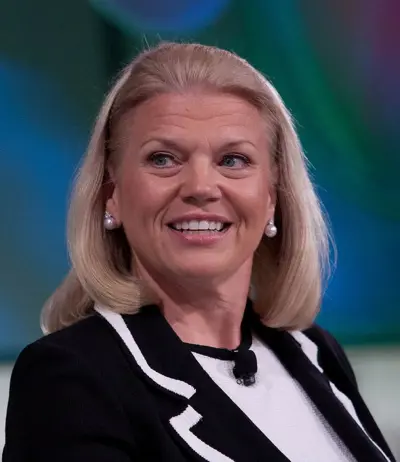
Virginia Marie "Ginni" Rometty is an American business executive who served as executive chairman of IBM after stepping down as CEO on April 1, 2020. She previously served as chairman, president and CEO of IBM, becoming the first woman to head the company. She retired from IBM on December 31, 2020 after a near-40 year career at IBM. Prior to becoming president and CEO in January 2012, she first joined IBM as a systems engineer in 1981 and subsequently headed global sales, marketing, and strategy. While general manager of IBM's global services division, in 2002 she helped negotiate IBM's purchase of PricewaterhouseCoopers' IT consulting business, becoming known for her work integrating the two companies. As CEO, she focused IBM on analytics, cloud computing, and cognitive computing systems.
