William P. Hepburn Quotes
No member ought to be compelled to go to another man, his equal and no more, a representative of a constituency no whit superior to his own, and ask for the poor privilege of calling his measure to the attention of the House.
The then rules of the House gave the speaker control of what legislation was introduced.
William P. Hepburn, 1833-1916, U. S. Congressman (Republican, IA), House debate, February 18, 1909
Sourced by: Eigen's Political and Historical Quotations

Two years later with bipartisan support Speaker Joseph Cannon was stripped of his party and the Rules Committee was created.


This clause was a throwback to the days before the separation of powers where the legislature could imprison anyone they thought contemptuous or interfering with their deliberation. Contrast this with the earlier constitution of Massachusetts which forbade the legislature from acting as a judge or prosecutor. See {616750} and {616749}. Also this was a clear invasion of freedom of the press and freedom of speech provided by the Bill of Rights. However, at the time, it was not clear that the Federal Constitution was binding on State Governments on State Matters. Modern law is still ambiguous on this general point, but not on freedom of speech and the press which is currently definitely binding on the states.

Samuel Langhorne Clemens, 1835-1910


In the EU most of the government power is dominated by appointed elites and not elected representatives.


The House Rules Committee had evolved into a very powerful committee which controlled the debate rules of every piece of legislation that came before the House. This Congress—the worst in American History—passed fewer bills than any other. Those that ever got out of the Rules Committee had Rules that prohibited the minority from even offering amendments.


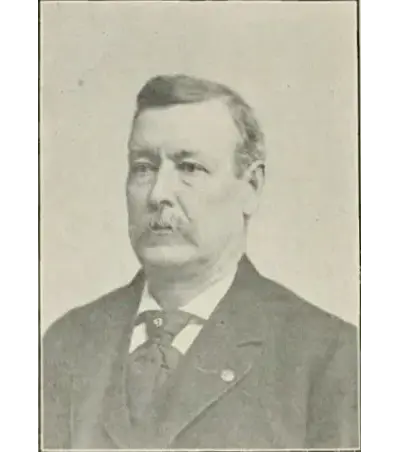
William Peters Hepburn was an American Civil War officer and an eleven-term Republican congressman from Iowa's now-obsolete 8th congressional district, serving from 1881 to 1887, and from 1893 to 1909. According to historian Edmund Morris, "Hepburn was the House's best debater, admired for his strength of character and legal acumen." As chair of one of the most powerful committees in Congress, he guided or sponsored many statutes regulating businesses, including most notably the Hepburn Act of 1906. The Hepburn Act authorized the U.S. Interstate Commerce Commission to require railroads to charge "just and reasonable" rates.
