Plautus Quotes
No man will be respected by others who is despised by his own relatives.
Plautus, Titus Maccius. The Comedies of Plautus. Translated by Henry Thomas Riley, vol. 1, H. G. Bohn, 1852.


It was this directive, together with the evidence of its acceptance by the Japanese soldier fighting to the death in Saipan and Okinawa, that lead President Truman and Chief of Staff Marshall to conclude that more lives would be saved by using the atomic bomb than invading the Japanese mainland. See {641063}


This is another proverb that has the de facto force of law. “Cutting her braid” means the honor killing of a girl who has been morally transgressed, usually sexually by a close relative. Even in earlier times fathers or even brother might have a love for a daughter or sister that would transcend this obligation to protect the family honor. The society to get around this human emotion which might produce total licentiousness if girls were not so disciplined came up with the idea of extending the right and obligation even to the paternal cousins. So if the father would not kill the girl, and the brothers would not, and the paternal uncles would not—or were unable to by reason of age or infirmity—any of the cousins could and should do dispatch the young lady and preserve the family’s honor—hence the term “honor killing.” In many Muslim societies, even today, this proverb is a legal defense against murder.


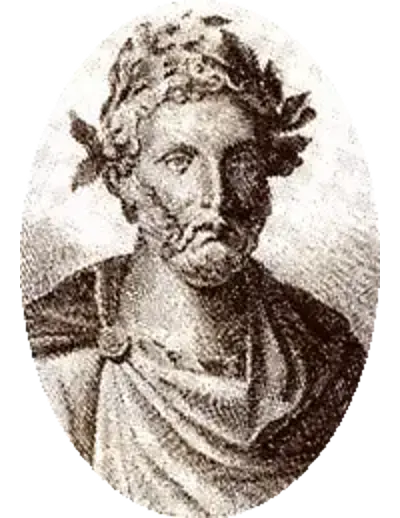
Titus Maccius Plautus (/ˈplɔːtəs/; c. 254 – 184 BC), commonly known as Plautus, was a Roman playwright of the Old Latin period. His comedies are the earliest Latin literary works to have survived in their entirety. He wrote Palliata comoedia, the genre devised by the innovator of Latin literature, Livius Andronicus. The word Plautine /ˈplɔːtaɪn/ refers to both Plautus's own works and works similar to or influenced by his.
