George Mason Quotes
No amendment of the proper kind would ever be obtained by the people, if the government should become oppressive, which I verily believe will be the case.
George Mason, 1725-1792, Member, Virginia & Federal Constitutional Conventions, Debate, Constitutional Convention, Philadelphia, PA, June 1787
Sourced by: Eigen's Political and Historical Quotations


Although the author was unknown, Cato had a following and his material was very influential.


This is a very important quotation because it illustrates a characteristic of most South American (and many other world) cultures. Namely, that respect and dignity are more important than freedom. There is even a Spanish term conveying the importance of respect: Respecto! This is very different from the Anglo-American tradition where if one has freedom, he is little concerned with what others think of him, and no amount of respect would offset the loss of freedom. The person who is free, has the dignity that he needs. The importance of respect over freedom was also a major characteristic of European Fascism in the 1930s.


This quotation is a great demonstration of how much wiser and the better politician of all the crowned heads of Europe that Queen Victoria was. There were stirrings of freedom and desire for parliamentary government throughout Europe. Queen Victoria, even though and perhaps because she was a young woman, had a great feel for fairness and reasonableness and had read a great deal of history. There were some radical red socialists calling for complete radical revolution scaring European Royalty profoundly. They reacted very conservatively and with reaction, reverting to more tyrannical practices of the past urged in that path by very conservative, right wing advisors. Victoria also had little respect for some of the monarchs who had little interest in their people and much with their personal power and wealth. In the end, it was England which was the only nation which never had a serious radical socialist / communist threat, and that had much to do with Victoria’s political acumen and wisdom.


The argument was Prohibition, the 18th Amendment.


The irony was that the Shah was overthrown by a population whom he had tried to control and deny basic freedoms. However, after he was overthrown, the Iranians ended up with a dictatorial fundamentalist Islamic theocracy. They had gone from the frying pan into the fire—from the absolute rule of the civil Shah to the absolute rule of the religious Supreme Leader.

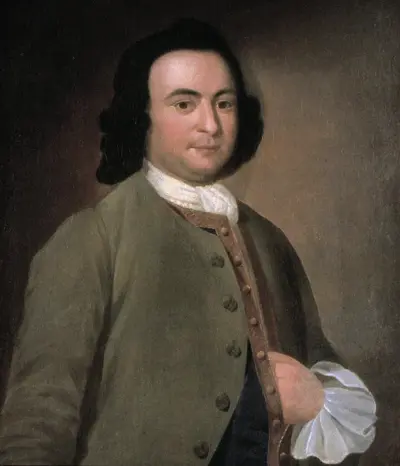
George Mason IV was an American planter, politician and delegate to the U.S. Constitutional Convention of 1787, one of three delegates who refused to sign the Constitution. His writings, including substantial portions of the Fairfax Resolves of 1774, the Virginia Declaration of Rights of 1776, and his Objections to this Constitution of Government (1787) opposing ratification, have exercised a significant influence on American political thought and events. The Virginia Declaration of Rights, which Mason principally authored, served as a basis for the United States Bill of Rights, a document of which he has been deemed a father.
