Manu Quotes
Never slay a Brahmana, though he have committed all possible crimes; let the king banish such an offender, leaving all his property with him and his body unhurt. No greater crime is known on earth than slaying a Brahmana; a king, therefore, must not even conceive in his mind the thought of killing a Brahmana
Manava Dharma Shastra. The Brahmana or Bramin is a member of the highest caste. Even in European Aristocratic societies, Aristocrats never had the degree of privilege that Indian religion, law and custom provided. Some of this socially exists today. This text is a part of the Hindu Holy Texts. Hindus believe that Manu was a prophet whose text is revealed or inspired.
Manu, ~ 500 BC, Hindu Teacher from India, Laws of Manu
Sourced by: Eigen's Political and Historical Quotations

Manava Dharma Shastra. The caste system in action. Note however that the highest caste aristocrats could not abuse even lower caste women with impunity the way that was common in early Christian Europe. However, the punishment was not death as required by Muslim law—see {590409}. This text is a part of the Hindu Holy Texts. Hindus believe that Manu was a prophet whose text is revealed or inspired.
Manava Dharma Shastra. In the Hindu caste system, the highest caste was allowed to vigilante justice while the other castes had to go through the king and his magistrates. This text is a part of the Hindu Holy Texts. Hindus believe that Manu was a prophet whose text is revealed or inspired.
Manava Dharma Shastra. The Hindus believe in reincarnation and that the souls of animals move up the ladder and if they are good are eventually born as humans (Sudras). These are the lowest caste in this terribly discriminatory system—the “untouchables.” But if a Sudra lives a pious life and accepts his lot, he is reincarnated as a higher cast human (twice born). This law illustrates the incredible discrimination that the cast system produced. In modern India, the caste system is illegal and there is no discrimination in law or by government. However it is still terribly evident in social life, marriage, employment and most phases of Indian society. This text is a part of the Hindu Holy Texts. Hindus believe that Manu was a prophet whose text is revealed or inspired.
Manava Dharma Shastra. This text is a part of the Hindu Holy Texts. Hindus believe that Manu was a prophet whose text is revealed or inspired.

Manava Dharma Shastra. Drinking alcohol was a very serious sin for the upper three castes. The lowest caste, the untouchables, were permitted to drink however. The theory was that alcohol pollutes the individual soul. Since the lowest caste man is already polluted, it makes no difference. This text is a part of the Hindu Holy Texts. Hindus believe that Manu was a prophet whose text is revealed or inspired.
Manava Dharma Shastra. This text is a part of the Hindu Holy Texts. Hindus believe that Manu was a prophet whose text is revealed or inspired.
Manava Dharma Shastra. This quotation shows that even thought the Ancient Hindu king was an autocrat, even he had to live within the law, and if he transgressed his fine was one thousand times the fin of a commoner. It is not clear whether or not this principle was actually imposed and when. But unlike the Christian King who could do no wrong, the Hindu king was not above the law. This text is a part of the Hindu Holy Texts. Hindus believe that Manu was a prophet whose text is revealed or inspired.
Manava Dharma Shastra. This text is a part of the Hindu Holy Texts. Hindus believe that Manu was a prophet whose text is revealed or inspired.


Although a Hindu, Nehru wrote of the atrophied Hindu society of India which enabled the Muslims to invade, conquer, and spread Islam over India.

Jinnah himself preached non-violence. At the time there was vicious sectarian violence throughout India but especially in The Frontier Province. However, the Muslims of the day did not heed him or Nehru or Gandhi for that matter and the violence continued. Jinnah however was a particularly shrewd politician who successfully used the threat of Muslim violence to obtain a separate Islamic state with Indian independence. He pointed to the threatening resolution issued earlier {627153}. The man who publicly preached peace, privately threatened violence.

There were other Roman Catholics who used violence including physically attacking the Tithe Collectors. In Ireland at the time the established church—the Protestant Anglican Church of Ireland—had the legal right to collect annual Tithes from the population in order to fund the activities of the Church. One difficulty however, was that the majority of the population were Roman Catholics. The poorest of them could not afford the tithe payments to any church. Whereas in the past, the Protestant Church officials did not force the issue of tithe collection from the poor, in about 1830 they changed and seized the property of the poor (Protestants and Catholics) and auctioned it off to pay for the tithe. The Cardinal organized a campaign of non-violent civil disobedience to combat the Tithe.


This quotation is famous for illustrating the kind of prejudicial statements which were then allowed by prosecutors to inflame a jury and the public in general. What this prosecutor was claiming was that these to defendants should be put to death, not only because of the nature of their crime but that they didn’t believe in God, and read the works of a German Philosopher. This was one of the most famous and covered cases in the Nation and the defendants were represented by the great attorney Clarence Darrow. Yet the allegation that Leopold and Loeb were both atheists which was never proved and was irrelevant anyway. Crowe also told the jury and the public that they were followers of Nietzsche a German Philosopher and made that seem somehow evil. He counted on the vestige of anti German prejudice from the First World War which had recently ended. The defendants were highly educated young men who had books of most philosophers. They had killed another youth under very strange psychological circumstances and the entire trial was about whether they should get the death sentence.


The terror to which he referred was to the French Revolution’s executing former aristocrats and then including anyone suspected of monarchist sympathies. This quotation shows how fanatics can rationalize evil as justice.


This sura on retaliation for murder is behind the Saudi Arabian law which allows the male relative of a murder victim to personally wield the sword in the beheading of the murderer.


In 2008 Pakistani Islamic terrorists, with the support of the Pakistani military, attacked Mumbai, India killing innocent civilians. Shoune was one of the Indian politicians who called for retaliation. The Indian government, however, restrained its forces and did not increase the cycle of violence.


Although technically illegal, India has a caste system where Brahmins are on the top and the “untouchables” are at the bottom. Discrimination exists throughout society except in some government programs.

Many Indians follow a rigid caste system where all people are born and divided into 5 social castes which are immutable—there is no caste mobility. An “untouchable” –the lowest Indian Caste—even if he make a million dollars—is still an untouchable and the higher casts would have nothing to do with him. Most upper caste people would not allow an untouchable physician to treat him or an untouchable cook to prepare his food. The Caste system is illegal under Indian law, but the majority of the Indians still follow it.
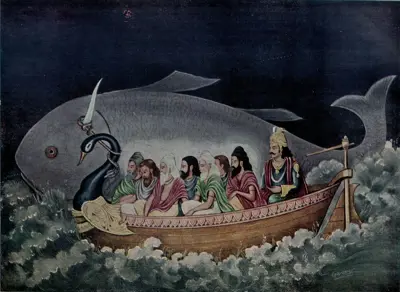
Manu (Sanskrit: मनु) is a term found with various meanings in Hinduism. In early texts, it refers to the archetypal man, or to the first man (progenitor of humanity). The Sanskrit term for 'human', मानव (IAST: mānava) means 'of Manu' or 'children of Manu'. In later texts, Manu is the title or name of fourteen mystical Kshatriya rulers of earth, or alternatively as the head of mythical dynasties that begin with each cyclic kalpa (aeon) when the universe is born anew. The title of the text Manusmriti uses this term as a prefix, but refers to the first Manu – Svayambhuva, the spiritual son of Brahma.
