Brian Greene Quotes
Nature's patterns sometimes reflect two intertwined features: fundamental physical laws and environmental influences. It's nature's version of nature versus nurture.
Greene, Brian. The Hidden Reality: Parallel Universes and the Deep Laws of the Cosmos. Alfred A. Knopf, 2011.


The Pope went on to state that Evolution was consistent with Roman Catholic doctrine, changing a position that had been taken by the Catholic Church and many fundamental protestant denominations. A few actually still reject evolution even after all the evidence and proof of the basic Darwinian theses. There is nothing in evolution that per se denies the existence of God or even that God created the universe and the mechanism of evolution. That is why the Catholic Church and so many Protestant Churches, Judaism, Buddhists, and so many other religions have no theological problem with evolution. Those religious groups who have difficulty with evolution are those fundamentalists (Protestants, Jewish and Muslims) who believe in the literal truth of Holy Scripture. They also assume that God designed each particular plant or animal species. Other religions hold that it was God who created the mechanism of evolution and that is how all the species developed and are developing today. Some religious evolutionists believe that evolution is God’s mechanism for perfecting man.

Evolution sometimes produce or retain components that have no purpose or are even inefficient. But he is urging the biologist to remember that none of the life form were designed much less designed efficiently. We humans have an appendix for example, which does nothing positive and sometimes gets infected and kills us. Yet it is still there. We have so much else on the positive side that a few weaknesses are not material to our survival.

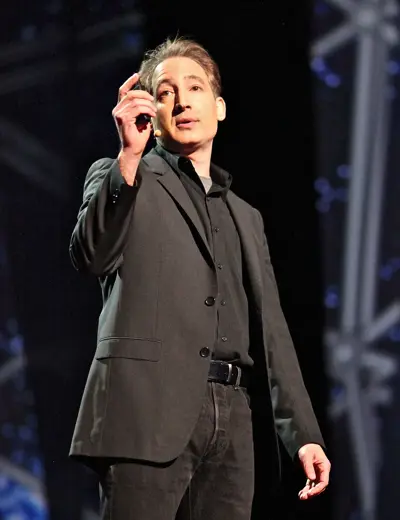
Brian Randolph Greene is an American theoretical physicist, mathematician, and string theorist. Greene was a physics professor at Cornell University from 1990-1995, and has been a professor at Columbia University since 1996 and chairman of the World Science Festival since co-founding it in 2008. Greene has worked on mirror symmetry, relating two different Calabi–Yau manifolds (concretely, relating the conifold to one of its orbifolds). He also described the flop transition, a mild form of topology change, showing that topology in string theory can change at the conifold point.
