Sadao Araki Quotes
My view is laissez-faire as far as Russia is concerned. They should have full freedom to develop the Socialist cause in their own country, but I strongly object to their ideas in our country. The Communists treat human beings like machines and I am opposed to this machine-like view of human institutions.
Sadao Araki, *, Japanese General and Army Minister, Gareth Jones, Interview With General Araki Sadao, Manchester Guardian, December 3, 1935
Sourced by: Eigen's Political and Historical Quotations


Some on the extreme left of the Labor Party at the time were extolling Soviet Russia while denigrating the United States. Crossman, an avid socialist thought that was absurd and said so at every opportunity. The pro Soviet wing of the Labour party got smaller and smaller. He and many others thought that Russian Communism was a very poor implementation of socialist ideas.

The Italian Communists were culturally and ideologically very different from the Russian Communists. The Italian view was a more nationalistic one and was closer to a Socialist Democracy than a “dictatorship of the proletariat”. Much more tolerant of diversity and not as ideological. See {637829} as a big example of the difference. Yet this was still in the midst of the Red Scare in America and some other areas of the West. After WWII, the CIA had secretly spent millions to get Italians to vote for the non-Communist candidates and helped organize Italian anti-Communist politicians who didn’t want the Communists to alter the Italian government to reflect any Communist or Socialist ideas. Meanwhile, the Italian party was under great pressure from Russia and some of the other Communist satellite countries to adopt a hardline revolutionary communist programs. Berlinquer and other Italian Communist leaders had many misgivings about Russian style Communism and they had to play off one side against the other for years.

Immediately after the Russian Revolution, the provisional government appointed him as Ambassador to the United States. However, the provisional government was supplanted when the Bolsheviks took over. Not enamored of Communism, he stayed in the United States with many other Russian refugees.

The letter was widely published. There were few left wing intellectuals who would take Lenin on at the time but Gorter was one. The immediate quotation shredded a brochure that Lenin had produced for world wide communism where he was critical of other left wing movements.

Vladimir Lenin


The British suspected that the Turks of Anatolia were complicit with Bolshevism


This memo was written a few days before his death and it was the last document he wrote. The communists tended to use the word “socialist” so they could make it seem that the Soviet Bloc was allied or part of the same grouping as the Scandinavian countries, India and other countries that were neither ideological communists nor controlled by the Russian or any other Communist Party. Those nations, in contrast tended to use the word, “socialist” to distinguish themselves from the Communist countries. This mostly confused many Americans. Some conflated the socialist countries and the communist countries making no distinctions. Others, like most European politicians kept the distinction in mind. Most Americans were confused as the Red Scare perpetrators tended to conflate, and the liberals tended to distinguish.
This is an example of what made the Cold War so difficult. The Italian Communists had great misgivings about the Russian version of Communism that tended to abuse human rights and try and control other countries. However, when the Russian Communists were under world attacks by the West, as with their incursion into Hungary, he urged that all the Communists stick together and defend the Russians even for policies that they thought wrong. On the West side, the same thing occurred. The United States tolerated and supported a number of terribly oppressive dictatorships that were virulently anti-Communist. Polarization was the international norm.


This quotation illustrates White’s extreme naivety about Stalinist Russia. At the time the Soviet Union had been backing communist insurgencies blatantly in China, Greece, and Korea for example. Most historians agree that White passed classified information to the Russians. He was accused of being a Communist, but there was never any evidence of that. Some people believe that he was a spy for the Russians and committed espionage, but others disagree observing that White was very much his own man and felt that much information that was classified never should have been. White substituted his own judgment, it is believed, about what could be given to the Russians. He was an admirer of what Russian socialism had accomplished economically, educationally and medically since the 1917 revolution deposing the Czar. Russia had been a valuable military ally, which had taken the brunt of both military and civilian casualties in WWII. White’s economics were certainly not Marxist but very much Keynesian. He was subpoenaed by the House Un-American Activities Committee where he was accused of being a Communist which he denied (see {634907}). He died of a heart attack 3 days later.
This quotation illustrates the statements of White that caused conservatives to dislike him. However, most historians agree that White passed classified information to the Russians. He was accused of being a Communist, but there was never any evidence of that. Some people believe that he was a spy for the Russians and committed espionage, but others disagree observing that White was very much his own man and felt that much information that was classified never should have been. White substituted his own judgment, it is believed, about what could be given to the Russians for the security system. He was an admirer of what Russian socialism had accomplished economically, educationally and medically since the 1917 revolution deposing the Czar. Russia had been a valuable military ally, which had taken the brunt of both military and civilian casualties in WWII. White’s economics were certainly not Marxist but very much Keynesian. He was subpoenaed by the House Un-American Activities Committee where he was accused of being a Communist which he denied (see {634907}). He died of a heart attack 3 days later.


At the time, the CIA was covertly financing and organizing opposition to Allende. Nonetheless, he won the election but the CIA organized a coup d’etat and removed him.


After the 1917 Russian Revolution many of the Western Countries sent troops to Russia where they aided the Whites against the Reds. When the Red Bolsheviks prevailed, there were many attempts to diplomatically and economically undermine the Communist government. This caused a unity among different Russian factions. Sforza urged leaving them alone and letting the Bolsheviks fail by their own ideology. Most Western nations and the United States did not agree with him.


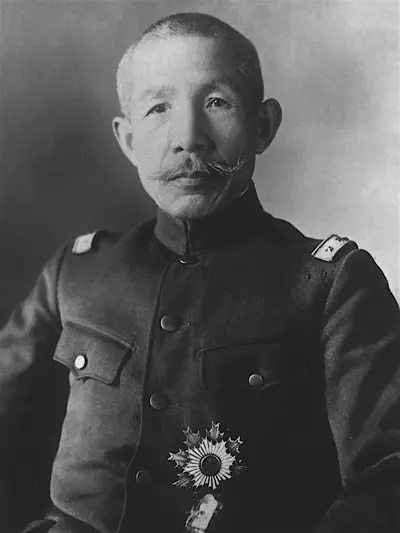
Baron Sadao Araki was a general in the Imperial Japanese Army before and during World War II. As one of the principal nationalist right-wing political theorists in the Empire of Japan, he was regarded as the leader of the radical faction within the politicized Imperial Japanese Army and served as Minister of War under Prime Minister Inukai. He later served as Minister of Education during the Konoe and Hiranuma administrations.
