Harry Reid Quotes
My mouth was faster than my brain. Sometimes it just comes out.
The majority leader was known for shooting from the hip. He had recently made one incorrect and embarrassing statements. His aide asked him why.
Harry Reid, Senate Majority Leader (Democrat, NV), Explanation to his chief of staff, David Krone, 2012
Sourced by: Eigen's Political and Historical Quotations


The Senator almost certainly meant to say “disagree” but “agree” is what came out in a gaff that had his Western Pennsylvania audience very confused.


George W. Bush was very bright, but ineloquent to the distress of many of his supporters who found it embarrassing for the leader of the Free World to be so ineloquent.

There are two general kinds of human action against their own interest. In the first find, citizens place the nation or the good of the community above their own personal advantage. Every soldier who voluntarily fights is engaging in this type of altruistic behavior. The other is where politicians, democratically elected or imposed offend people in some way. In a democracy people will vote against candidates whose policies are better for the individual, but he is offended by their corruption, immorality, racism, sexism or the like. Richard Nixon was turned on by the vast majority of Americans despite the fact that he presided over national affluence, and had by almost any standard made great breakthroughs in foreign policy. Another example is most of the Arab nations whose citizens support leaders who can and will not improve their standard of living but makes them feel good because they maintain Islamic dignity be opposing the West, even when the opposition itself makes development and growth much more difficult.

He meant to say “repository” and not “suppository”. The latter is a capsule of medicine that is placed inside the rectum.

While this probably was a slip of the tongue, President Bush and governor Perry both had civil right and individual had rights as a lower priority than a individual responsibility, strong growth economy or the military. There were many who really believed that the two men really thought excessive personal reedom a problem that people and the government must be protected from, like freedom for a woman to choose an abortion. For Perry in particular many thought that if this was a slip of the tounge, it was likely a Freudian slip as it what he really wants.


In his boisterous dissent he read from the bench in the EPA v. EME Homer City case, Supreme Court Justice Antonin Scalia, made a mistake and in citing a previous opinion he had written, he made an error recalling what he had written previously. Critics of the justice not only castigated him but made fun of his seemingly foolish error that a law student should not make. Whalen’s quotation is important because it illustrated the highly partisan tone in American politics at that. Whalen, a partisan conservative explains how he would do the same thing if a liberal judge made a mistake. The error was corrected in the final published version of the opinion, and it did not affect the logic of the dissent or even the factual arguments for the dissent. Yet the quest for partisan advantage and trashing a political opponent was so in vogue that a minor mistake was treated as a major political scandal. The end of the 20th century and the beginning of the 21st were not the most partisan and nasty era of American politics but it was one of the worst.

Samuel Langhorne Clemens, 1835-1910


Roosevelt himself was a great orator and there were many who thought those same terms might apply to him.

Everett, considered a great orator, spoke at Gettysburg before Lincoln, but he went on for 2 hours. Hardly anyone recalls his speech. His complement was contemporary praise indeed and right on in the view of Americans of future generations.


In all countries, many politicians play to this human weakness and tend to alarm the public. It is harder for the body politic to believe a positive narrative even if true; easy to believe a negative narrative even when false and deliberately exaggerated.
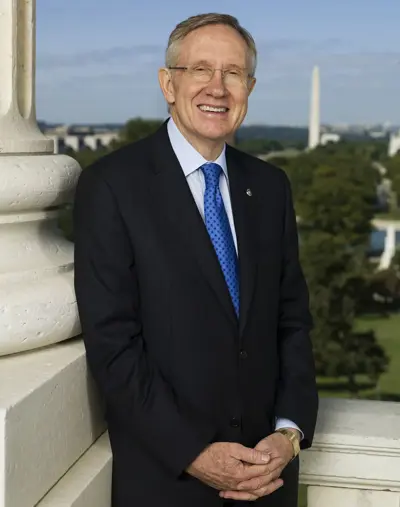
Harry Mason Reid is a retired American attorney and politician who served as a United States Senator from Nevada from 1987 to 2017. He led the Senate's Democratic Conference from 2005 to 2017 and was the Senate Majority Leader from 2007 to 2015.
