Gerald Edelman Quotes
Most theoretical work since the proposals of Hebb (1949) and Hayek (1952) has relied upon particular forms of dependent synaptic rules in which either pre- or postsynaptic change is contingent upon closely occurring events in both neurons taking part in the synapse.
Finkel, Leif H., and Gerald M. Edelman. "Interaction of Synaptic Modification Rules Within Populations of Neurons." Proceedings of the National Academy of Sciences, vol. 82, no. 4, 1985, p. 1291.


Neiroscientists had learned that the brain is a complex set of Neurons, Axons and Dendrites which actually form millions of electro-chemical circuits with many circuits connected to others by the dendrites which function like wires. And they ahve shown that if circuits are wired togeter by dendrite connections, whan and electical charge is injected into one of the circuits, the other circuits whcih are connected to it by dendrites (wired together) will also have an electrical charge (fires). Combinations of many circuits wired together in different patterns actuall funtion like a computer and make decisions based on which ones are firing as a result of artificallyh injecting voltage or naturally increasing the voltage by stimulating the right organs. So when an eye sees an object moving from left to right it casues different circuts to fire from what happens when the object moves from right to lect and the brain can make a different set of decisions about what a hand should do to intercept the object for instance.


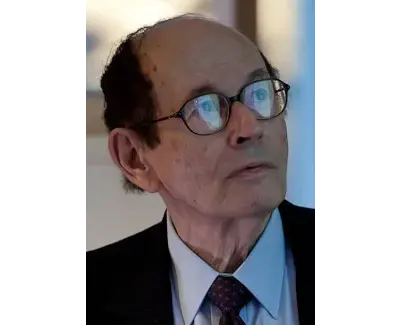
Gerald Maurice Edelman was an American biologist who shared the 1972 Nobel Prize in Physiology or Medicine for work with Rodney Robert Porter on the immune system. Edelman's Nobel Prize-winning research concerned discovery of the structure of antibody molecules. In interviews, he has said that the way the components of the immune system evolve over the life of the individual is analogous to the way the components of the brain evolve in a lifetime. There is a continuity in this way between his work on the immune system, for which he won the Nobel Prize, and his later work in neuroscience and in philosophy of mind.
