Buddha Quotes
Monks, when ignorance is abandoned, and knowledge arises in the monk, with the ending of ignorance and the arising of knowledge he clings neither to sense-pleasures, nor does he cling to views, nor to precepts and vows, nor to a Self-doctrine. Not clinking, he is not disturbed; not disturbed, he attains individually nibbana.
The Middle Length Discourses of the Buddha: A Translation of the Majjhima Nikaya. Translated by Bhikkhu Ñāṇamoli and Bhikkhu Bodhi, Wisdom Publications, 1995, p. 162.


Learning, studying and seeking knowledge are fundamental to Mormonism. In this sense, it is very similar to Judaism.


Ingersoll was considered to be the greatest orator and political thinker of his day, but his overt atheistic views curtailed his elected political career.


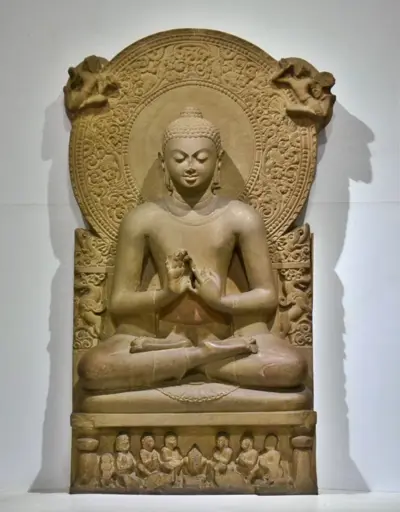
The Buddha (also known as Siddhattha Gotama or Siddhārtha Gautama or Buddha Shakyamuni) was a philosopher, mendicant, meditator, spiritual teacher, and religious leader who lived in what is now Nepal and India (c. 5th to 4th century BCE). He is revered as the founder of the world religion of Buddhism, and recognized by most Buddhist schools as the Enlightened One who is believed to have transcended Karma and escaped the cycle of birth and rebirth. He taught for around 45 years and built a large following, both monastic and lay. His teaching is based on his insight into duḥkha (typically translated as "suffering") and the end of dukkha—the state called Nibbāna or Nirvana.
