William Odom Quotes
Military officers from different countries, when they meet each other, tend to sort of fall in love, become mutual admiration societies, at the expense of realities.
Odom, William E. Interview with Brian Lamb. Booknotes, C-SPAN, 14 Mar. 1999.


At the time of this quotation, he was the President of the America-Mexico Chamger of Commerce and his Mexican members were very anxious or disturbed by the prospect of Donald Trump being sworn in as President. Trump, during his presidential campaign, had courted many of the anti Hispanic voters and organizations, had labeled Mexican immigrants as "criminals" and "rapists", and had promised to build a very high wall accross the Mexican U. S, border and "make the Mexican's pay for it." Zapanta was also under consideration by President Elect Trump as the U. S. Ambassador to Mexico. These words were particualy well and delicately chosen to try and maintain his staning with with Trump and the Mexican leadership.

Although, on sever occasions Mao tried to reach out to the United States, the fact that he was leading a communist movement and Chiang Kai-shek, our recognized ruler of China hated Mao caused his overtures to be rebuffed. American military leaders knew very little about China and our intelligence was almost non-existent. They assumed that he was under the control of Russia and Joseph Stalin when in fact, the Russians wanted to oust Mao for not following Stalin’s communist orthodoxy. They succeeded in firing him as head of the party and replacing him with a committee of more loyal communists. Not only did the US rebuff Mau’s outreach attempts, but American money and military material financed 6 different military campaigns by Chiang to exterminate Mao and his communists.
None succeeded as the vast majority of the peasants supported Mao and his troops and provided support and information in Chiang’s attempts. Some historians believe we “bet on the wrong horse”.


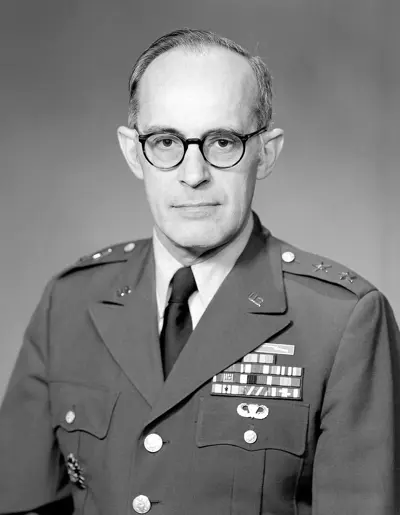
William Eldridge Odom was a United States Army lieutenant general who served as Director of the National Security Agency under President Ronald Reagan, which culminated a 31-year career in military intelligence, mainly specializing in matters relating to the Soviet Union. After his retirement from the military, he became a think tank policy expert and a university professor and became known for his outspoken criticism of the Iraq War and warrantless wiretapping of American citizens. He died of an apparent heart attack at his vacation home in Lincoln, Vermont.
