Wilkie Collins Quotes
Men ruin themselves headlong for unworthy women.
Collins, Wilkie. The Woman in White. Sampson Low, Son, & Co., 1860.


There are two general kinds of human action against their own interest. In the first find, citizens place the nation or the good of the community above their own personal advantage. Every soldier who voluntarily fights is engaging in this type of altruistic behavior. The other is where politicians, democratically elected or imposed offend people in some way. In a democracy people will vote against candidates whose policies are better for the individual, but he is offended by their corruption, immorality, racism, sexism or the like. Richard Nixon was turned on by the vast majority of Americans despite the fact that he presided over national affluence, and had by almost any standard made great breakthroughs in foreign policy. Another example is most of the Arab nations whose citizens support leaders who can and will not improve their standard of living but makes them feel good because they maintain Islamic dignity be opposing the West, even when the opposition itself makes development and growth much more difficult.


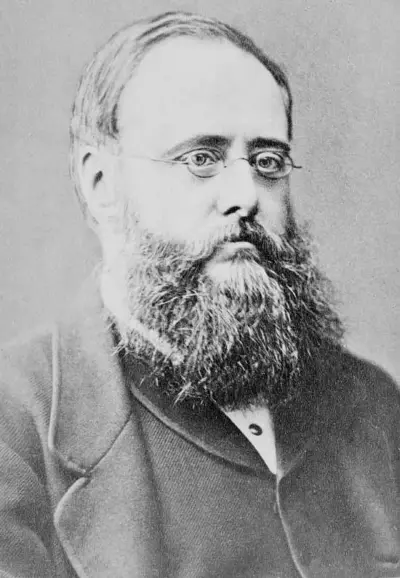
William Wilkie Collins was an English novelist and playwright known for The Woman in White (1859), and for The Moonstone (1868), which has been called the first modern English detective novel. Born to the London painter William Collins and his wife, the family moved to Italy when Collins was twelve, living there and in France for two years, which allowed the author to learn Italian and French. He worked initially as a tea merchant. After publishing Antonina, his first novel, in 1850, Collins met Charles Dickens, who became a friend and mentor. Some Collins works first appeared in Dickens's journals Household Words and All the Year Round. The two also collaborated on drama and fiction. Collins gained financial stability and an international following by the 1860s, but began to suffer from gout. He took opium for the pain, but became addicted to it. His health and his writing quality then declined in the 1870s and 1880s. Collins was critical of the institution of marriage: he split his time between widow Caroline Graves – living with her for most of his adult life, treating her daughter as his – and the younger Martha Rudd, by whom he had three children.
