John Jay Quotes
... men of whom the people have had time to form a judgment, and with respect to whom they will not be liable to be deceived by those brilliant appearances of genius and patriotism, which like transient meteors sometimes mislead as well as dazzle.
Arguing for minimum age requirements for legislators:
John Jay, 1745-1829, President of the Continental Congress, Governor of New York (Federalist), U. S. Foreign Secretary, First Chief Justice of the U. S. Supreme Court, The Federalist No. 64, March 5, 1788
Sourced by: Eigen's Political and Historical Quotations

1st Marquees of Halifax. This is a very important quotation because it still has much validity today. The “Prince” is the Monarch, King or Official Heading the State. Savile points out that if the Price does not take the time or make the effort to understand an issue and its complexity, he then must trust his advisors and their opinions rather than have any intelligent and knowledgeable views of his own. In modern times the advice applies to elected officials, executive and legislative. If they do not take time and make the effort to understand a complex issue, they cannot use their own judgment but must accept the judgment of staff, friends, colleagues, party leaders, lobbyists or members of committees who they hope are not also ignorant. In modern legislatures, there are so many different issues in so many areas, that it is very difficult to have the time to make the effort to study all the issues. This problem is compounded with politicians as they tend to spend large amounts of their time fundraising for their next election and simply do not have enough time to study issues. In the Congress for example, most members vote on bills that they have not even read and they end up trusting someone else’s judgment.


In a Senate confirmation hearing for Alfred S. Regnery as the director of the Justice Department's Office of Juvenile Delinquency, the nominee admitted that he had no direct experience in the field and couldn't name a single work he had ever read on the subject of juvenile delinquency. Senator Metzenbaum said:


A conservative Calvinist weekly periodical. Just as today, there were few politicians who could stand up to such a test.


Not all kings were uncaring aristocrats and a few were excellent, compassionate, rulers. Most were not however.


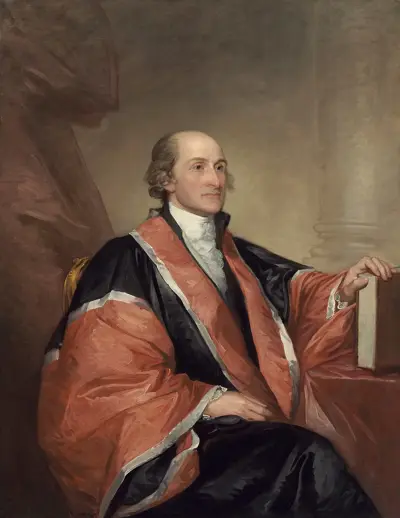
John Jay was an American statesman, patriot, diplomat, Founding Father, abolitionist, negotiator, and signatory of the Treaty of Paris of 1783. He served as the second Governor of New York and the first Chief Justice of the United States (1789–1795). He directed U.S. foreign policy for much of the 1780s and was an important leader of the Federalist Party after the ratification of the United States Constitution in 1788.
