Booker T. Washington Quotes
Many strikes and similar disturbances might be avoided if the employers would cultivate the habit of getting nearer to their employees, of consulting and advising with them, and letting them feel that the interests of the two are the same.
Washington, Booker T. Up from Slavery: An Autobiography. Doubleday, Page & Co., 1901, p. 165.


At the time, most company owners and managers refused to bargain collectively with employee elected organizations. Hoover was then an exceptionally modern business person who realized the importance of good working relations between management and labor and advocated collective bargaining. However, as he got deeper into partisan politics, he backed off urging this. Nationally, in the 1960s collective bargaining had become an instrument of basic sound management, but more and more managements returned to simply refusing to bargain with employee organizations and instead strengthened their managers and supervisors and adopted (by choice and by government regulation) more and more modern, healthy, safe, efficient and attractive working conditions and policies. By the 21st century, labor unions and employee organizations had lost their attractiveness while managers were more attentive to workers and there were very few private companies engaged in collective bargaining.


Theological & Legal Expert. A fatwa is a religious legal ruling


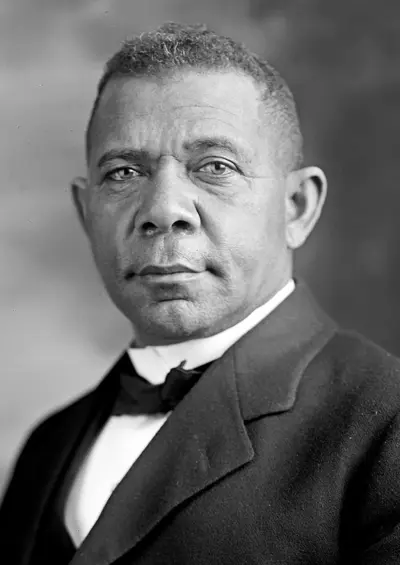
Booker Taliaferro Washington was an American educator, author, orator, and adviser to several presidents of the United States. Between 1890 and 1915, Washington was the dominant leader in the African American community and of the contemporary black elite. Washington was from the last generation of black American leaders born into slavery and became the leading voice of the former slaves and their descendants. They were newly oppressed in the South by disenfranchisement and the Jim Crow discriminatory laws enacted in the post-Reconstruction Southern states in the late 19th and early 20th centuries.
