Will C. Barnes Quotes
Man's greed to obtain something for nothing has never yet been able to content itself with a moderate profit.
Barnes, Will C. Western Grazing Grounds and Forest Ranges. The Breeder's Gazette, 1913.


See Conrad Black {622808} for a real life version of this idea.


President Theodore Roosevelt referred to the same groups similarly. See {638453} and {639956}.

In 1811 Calhoun was a freshman congressman. Congress was considering raising 10,000 men to resist the encroachments of Great Britain. The large cost of the enterprise was preventing the measure from passing. Calhoun objected to considering the cost factor at all:


The president was himself an evangelical Christian and he had gone out of his way to issue executive orders authorizing payments to be made for church operated social service activities where proselytizing was permitted. Many Americans thought bush had jumped over the wall separating church and state and yet some of the evangelical Christians kept insisting on more and more money.


There was a great deal of war profiteering during the American Revolution and Gerard thought that this was a negative indicator of prospects for America. Things actually got worse during the war of 1812 where there was war profiteering also and many in New England profited from selling supplies to the British enemy. Unfortunately, taking economic advantage of a wartime crisis has accompanied virtually every war in which we have become engaged. In WWII, the automobile industry virtually blackmailed the government into high profits if they would produce war material instead of cars, and the rapaciousness of Haliburton in the Iraq war became a national scandal. See George Washington’s comment on the time {624228}.


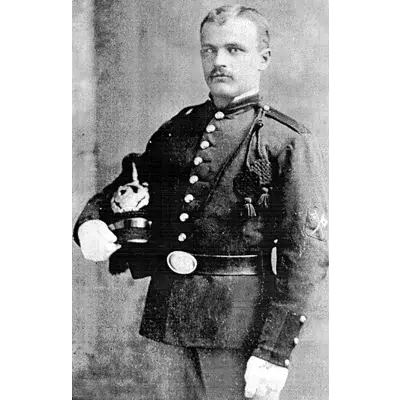
Will Croft Barnes, a private in the U.S. Army Signal Corps, was distinguished for his action in the battle at Fort Apache, Arizona Territory on September 11, 1881. When Fort Apache was besieged by warriors of Geronimo, Barnes escaped and rode to Fort Thomas. Soldiers from Fort Thomas came to the aid of Fort Apache. For his gallantry, Barnes received the Medal of Honor on November 8, 1882, the citation noting his "bravery in action."
