Euripides Quotes
Mankind . . . possesses two supreme blessings. First of these is the goddess Demeter, or Earth whichever name you choose to call her by. It was she who gave to man his nourishment of grain. But after her there came the son of Semele, who matched her present by inventing liquid wine as his gift to man. For filled with that good gift, suffering mankind forgets its grief; from it comes sleep; with it oblivion of the troubles of the day. There is no other medicine for misery.
Euripides. Bacchae. Translated by David Kovacs, Harvard University Press, 2002, lines 274-283.


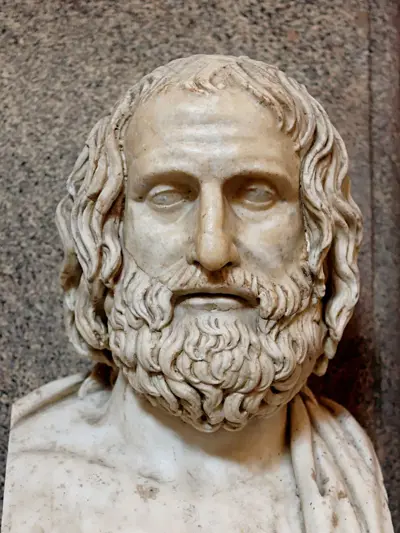
Euripides (/jʊəˈrɪpɪdiːz/; Greek: Εὐριπίδης Eurīpídēs, pronounced [eu̯.riː.pí.dɛːs]; c. 480 – c. 406 BC) was a tragedian of classical Athens. Along with Aeschylus and Sophocles, he is one of the three ancient Greek tragedians for whom any plays have survived in full. Some ancient scholars attributed ninety-five plays to him, but the Suda says it was ninety-two at most. Of these, eighteen or nineteen have survived more or less complete (Rhesus is suspect). There are many fragments (some substantial) of most of his other plays. More of his plays have survived intact than those of Aeschylus and Sophocles together, partly because his popularity grew as theirs declined—he became, in the Hellenistic Age, a cornerstone of ancient literary education, along with Homer, Demosthenes, and Menander.
