Euripides Quotes
Love is all we have, the only way that each can help the other.


He was talking about teh importance of getting people to learn about and know birds and other wildlife so then they would be enviornmentally conscious by wanting to take care of the wildlife. However, this quotation has much more generality, in that this characeristic of human nature seems to apply to immigrants, people of different religions and even of different polarized political subgroups. Contact with and knowing others tends to induce empathy, care, concern adn love.

There were few reformers who had such a long, extensive, and activist career in both England and India. She began her career as a minister’s wife but was literally turned out of her house by her husband for whom she was not religiously orthodox enough. This started her religious activism which ended with her as an atheist. She led a match-girl’s strike, founded a Hindu college in India, and was even arrested for pornography in England when she wrote a book advocating birth control. She is on many lists of “Great Indians” along with Gandhi and Nehru. She was Jiddu Krishnamurti’s teacher.


Congress had diminished Adams authority to deal with the French and sided with Benjamin Franklin and the French Foreign Minister. Mrs. Adams lobbied members of Congress. Years later First Lady Lady Bird Johnson would echo a similar sentiment. See {605230}.


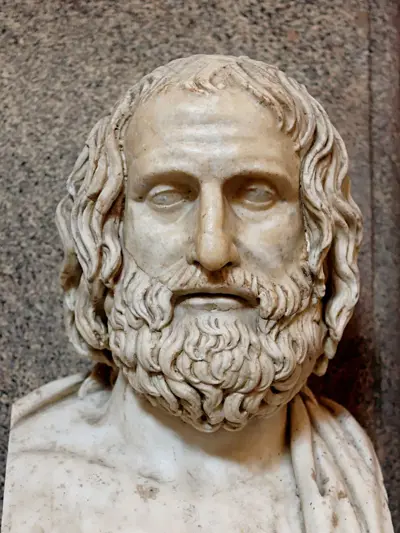
Euripides (/jʊəˈrɪpɪdiːz/; Greek: Εὐριπίδης Eurīpídēs, pronounced [eu̯.riː.pí.dɛːs]; c. 480 – c. 406 BC) was a tragedian of classical Athens. Along with Aeschylus and Sophocles, he is one of the three ancient Greek tragedians for whom any plays have survived in full. Some ancient scholars attributed ninety-five plays to him, but the Suda says it was ninety-two at most. Of these, eighteen or nineteen have survived more or less complete (Rhesus is suspect). There are many fragments (some substantial) of most of his other plays. More of his plays have survived intact than those of Aeschylus and Sophocles together, partly because his popularity grew as theirs declined—he became, in the Hellenistic Age, a cornerstone of ancient literary education, along with Homer, Demosthenes, and Menander.
