Ernest Andre Gellner Quotes
Looking at the contemporary world, two things are obvious: democracy is doing rather badly, and democracy is doing very well. New states are born free, yet everywhere they are in chains. Democracy is doing very badly in that democratic institutions have fallen by the wayside in very many of the newly independent 'transitional' societies, and they are precarious elsewhere. Democracy, on the other hand, is doing extremely well in so far as it is almost (though not quite) universally accepted as a valid norm.
Ernest Andre Gellner, 1925-1995, French Philosopher and Social Anthropologist, Contemporary Thought and Politics, 1974
Sourced by: Eigen's Political and Historical Quotations


This quotation of a very popular Muslim cleric illustrates the wide range of political views of Islamic leaders and authorities. Whereas most shun democracy as placing public opinion over the word of God, there are many like al-Qaradawi who have a modernist interpretation of Islam.

Essentially, the key value is civilian control of the military. For centuries in human history the civil leader has been the strongest military leader or the most influential church leader. The notion of subservience of the military to the elected civilian government is crucial and where there are other traditional roles of the military such as policing government, eliminating corruption, enforcing the Constitution and the like, the democracy exists only to the extent that the military leaders will allow it to if they have the power to control things.

Goldman, Alexander Berkman, Eugene Debbs, and many other leading intellectuals went to jail for opposing the draft, a violation of a law of the time. She served 22 months. She was a vigorous proponent of freedom of speech.


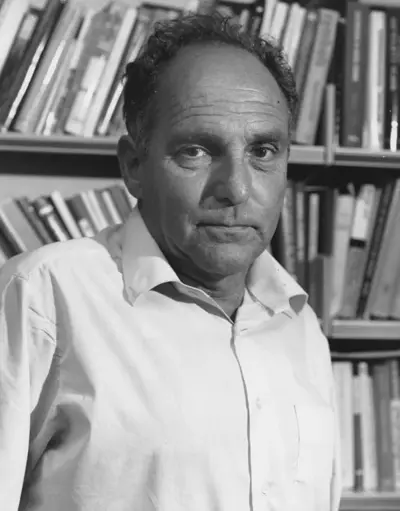
Ernest André Gellner was a British-Czech philosopher and social anthropologist described by The Daily Telegraph, when he died, as one of the world's most vigorous intellectuals, and by The Independent as a "one-man crusader for critical rationalism".
