Jean-Jacques Burlamaqui Quotes
Liberty is not wanting in popular (democratic) states; nay, they have rather too much of it, since it degenerates into licentiousness. Hence it is that they are ever tottering and weak. Intestine commotions, or foreign attacks, often throw them into consternation.
Even in modern America, we overreact to foreign attacks or acts of terrorism as do most democracies and intestine party conflict is common.
Jean-Jacques Burlamaqui, 1694–1750, Swiss Counsel of State & Political Philosopher, The Principles of Political Law, Part II, Chapter II, 1748
Sourced by: Eigen's Political and Historical Quotations


To modern Americans, this quotation is shocking. The thought that the United States Army could publish such a statement is hardly believable. Many first reactions assume that there was some mid level fascist officer in a training department which issued it. However this was not the case. It was issued in the name of the Secretary of War under the signature of Generals C.P. Summerall and Lutz Wahl, Chief of Staff and Adjutant General respectively. This document and others like it together with the views of pro fascist Americans like Henry Ford convinced Hitler and other European fascist leaders that America would not interfere with their designs on Europe.

The University Presidents had written to the American Public arguing that the German aggression was the result of the militarists in the German society dominating the people and pushing them to war. They argued that most German people were not really responsible. Lamprecht took exception and argued that the German policy was the democratic will of the majority of the German people. He claimed that Germany at the time was more of a de facto democracy than America—as the Untied States did not have a Voting Rights Act or any way of de facto ensuring that all citizens could vote—particularly Negroes in the South. While he was accurate about the voting aspects of a democracy, Germany neither had the Constitution nor a judiciary that was independent and co-equal to the executive and legislature, but Germany did not have the institutions with democratic traditions. The greatest embarrassment to modern Germans is that Adolf Hitler was actually elected by a majority of Germans and was very popular until things in Germany started to go poorly. This quotation is very important in that it shows the importance of a Constitution to limit the powers of even a popularly elected government.


After the Dutch Revolution, there were many factions—all against the others in a hyperpartisanship that made constructive politics almost impossible.


The government relationship to people phrase, although probably Lincoln's most famous, was not totally original. John Adams came close in a 1774 proclamation. As did John Marshall in his McCulloch v. Maryland decision. Daniel Webster's Speech on Foot's Resolution was very close. as was Theodore Parker in 1850 {629578}. There was also Thomas Cooper in 1795. But the earliest appears to be John Wycliffe in 1382 {567292}. It is not known with which of these Lincoln was familiar.
The United States had then only existed for about 30 years but was already a model.

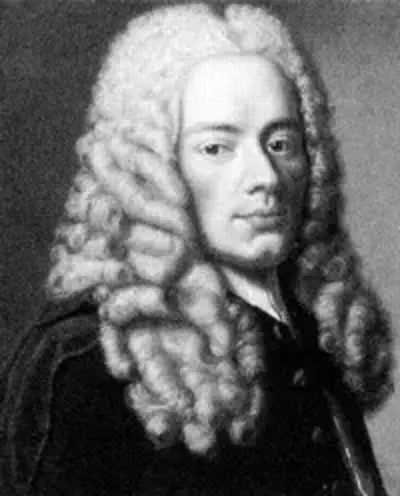
Jean-Jacques Burlamaqui was a Genevan legal and political theorist who popularised a number of ideas propounded by other thinkers.
