Heinrich Heine Quotes
Liberty is a new religion, the religion of our age.
Heinrich Heine, 1797-1856, German Writer & Critic, English Fragments, 13
Sourced by: Eigen's Political and Historical Quotations


Abdul Rahman, Afghan citizen, had converted from Islam to Christianity 16 years before. Conversion from Islam is a capital crime under Sharia Law which was the law of Afghanistan even after the Taliban had been overthrown. He was jailed and threatened with death. Statements like this and others made directly to the government persuaded the Afghan politicians to go against their mullahs who demanded the death penalty as is proscribed by Islamic Law—Sharia. The judges tried to get Rahman to recant and he would not (see {589518}). So they finally decided that he must be mentally insane and therefore could not be tried, and the problem was solved that way.


Note the absolutism of the word unbounded.


Although the Puritans were the first religious group of immigrants who came to America for religious freedom, once the obtained it, they were terribly despotic in trying to force others to adopt their religious views. By seeking religious freedom the planted the seeds of democracy. By denying it to others, they also planted the seed of the First Amendment. Those who insisted upon separation of church and state always cited the Puritans as example one of what can happen with an established church in America.


The 3rd sentence is one of his greatest quotes. He delivered this speech towards the end of the 1st year of President Donald Trump's Administration. Althought he never mentioned Trump by name, this speech was a rare major criticism of a sitting president by a former president. This was also one of the few speeches Bush gave after leaving office. On the same day, former President Barak Obama also gave a major speech and also castigated President Trump although neither of the ex-presidents knew that the other was about to deliver their criticism of Trump. It was one of the very unusal occurances in American history.


“Coligny” was Gaspard de Coligny, 1519–1572, the Huguenot fonder. “William the Silent” was William of Orange the main leader of the Dutch revolt against the Spanish, and Cromwell was the leader of the English revolution. All three were major figures in advancing the concept of individual freedom of the ordinary man and all three were profoundly influences by John Calvin.


Despite this clear statement, later the Colonial legislature withdrew the franchise from Roman Catholics. See {624149}. Despite this temporary restriction of religious freedom, Rhode Island and Connecticut were far ahead of the other New England colonies in freedom of conscience.

This article was published under the name of “A Lover Of Peace” but is generally attributed to Paine.
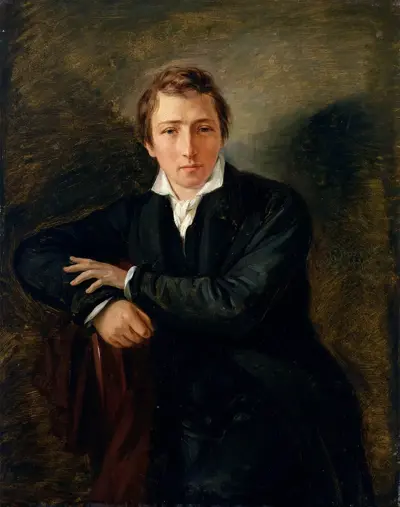
Christian Johann Heinrich Heine was a German poet, writer and literary critic. He is best known outside Germany for his early lyric poetry, which was set to music in the form of lieder (art songs) by composers such as Robert Schumann and Franz Schubert. Heine's later verse and prose are distinguished by their satirical wit and irony. He is considered part of the Young Germany movement. His radical political views led to many of his works being banned by German authorities—which, however, only added to his fame. He spent the last 25 years of his life as an expatriate in Paris.
