Visigoths Quotes
Let no one think that he can do what is unlawful because he was ignorant of the provisions of the laws, and what is sanctioned by them; for ignorance does not render him innocent, whom guilt has subjected to the penalties of the criminal.
This is the most formalized and sophisticated compendium of laws of the so-called “barbaric peoples” of Europe. The compilation was in many ways a documentation of the traditional laws of the Visigoths that had evolved over hundreds of years. In this case, the principle was an old ancient Roman principle—see {617205}
Visigothic Code, Forum Judicum, Legal Compilation of the laws of the Spanish Visigoths, ~650
Sourced by: Eigen's Political and Historical Quotations

These were the most terrible and restrictive laws against Jews who would be hunted down and forced to accept Christianity. The Visigothic laws were a combination of Visigothic tradition and the codification by Catholic Clerics. Many scholars have traced the terrible policies and practices against Jews by the Spanish throne and the Inquisition 500 years later to these earlier Spanish Visigoths and their formal legal structure. This is the most formalized and sophisticated compendium of laws of the so-called “barbaric peoples” of Europe. The compilation was in many ways a documentation of the traditional laws of the Visigoths that had evolved over hundreds of years.


Essentially, this was the law in much of the United States until the last century when the concept of sufficient force replaced any deadly force. There are still some Americans who prefer the Visigothic law to our more modern one. This is the most formalized and sophisticated compendium of laws of the so-called “barbaric peoples” of Europe. The compilation was in many ways a documentation of the traditional laws of the Visigoths that had evolved over hundreds of years.


This is a principle that most American jurists would applaud, with the exception of the very far right that does not even want foreign law consulted by the courts even for “useful knowledge” that they might contain. This is the most formalized and sophisticated compendium of laws of the so-called “barbaric peoples” of Europe. The compilation was in many ways a documentation of the traditional laws of the Visgoths that had evolved over hundreds of years.
This is the most formalized and sophisticated compendium of laws of the so-called “barbaric peoples” of Europe. The compilation was in many ways a documentation of the traditional laws of the Visigoths that had evolved over hundreds of years.
This was an amazing leap in the inducement of foreign trade. The Visigoths valued foreign trade so highly that they realized that many foreign merchants would not come to “barbarian lands” for fear of running afoul of local “barbarian” laws. To motivate trade, they actually gave up their legal sovereignty. Rome and the other larger markets did not have to make such concessions. This is the most formalized and sophisticated compendium of laws of the so-called “barbaric peoples” of Europe. The compilation was in many ways a documentation of the traditional laws of the Visigoths that had evolved over hundreds of years.
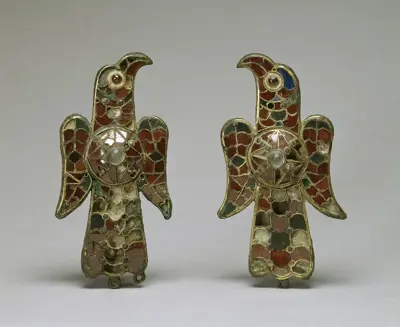
The Visigoths (/ˈvɪzɪɡɒθs/; Latin: Visigothi, Wisigothi, Vesi, Visi, Wesi, Wisi) were an early Germanic people who, along with the Ostrogoths, constituted the two major political entities of the Goths within the Roman Empire in Late Antiquity, or what is known as the Migration Period. The Visigoths emerged from earlier Gothic groups, including a large group of Thervingi, who had moved into the Roman Empire beginning in 376 and had played a major role in defeating the Romans at the Battle of Adrianople in 378. Relations between the Romans and the Visigoths were variable, alternately warring with one another and making treaties when convenient. Under their first leader, Alaric I, they invaded Italy and sacked Rome in August 410. Afterwards, they began settling down, first in southern Gaul and eventually in Hispania, where they founded the Visigothic Kingdom and maintained a presence from the 5th to the 8th centuries AD.
