Murray Rothbard Quotes
Leading the boom of 1838 were state governments, who, finding themselves with the unexpected windfall of a distributed surplus from the federal government, proceeded to spend the money wildly and borrow even more extravagantly on public works and other uneconomic forms of 'investment.'
Rothbard, Murray N. A History of Money and Banking in the United States: The Colonial Era to World War II. Ludwig von Mises Institute, 2002.


Mises defines government revenue in such a manner that it always relly belonged to individuals, therefore when government invests in enterprises that accumulate capital via profits, Mises does not consider it capital accumulation. One counterexample of this point is the George Washington Bridge in New York, built in Mises lifetime by Robert Moses of the New York Port Authority. The tolls on the bridge paid off the bondholders who financed much of the initial construction. But then capital started to accumulate at such a rapid rate that Moses was able to build other capital projects ranging from highways to the World Trade Center Buildings with capital constantly accumulated. The New York Port Authority under Moses generated more capital appreciation than any corporation that had been in existence at that point. And he could not even sell stock. However, the Port Authority and a few others were exceptions. Generally government did was unable to accumulate capital in its enterprises.


This statement was part of the historical and philosophical underpinnings of major public works programs as public employment programs such as the Job Corps, CCC, WPA and the like.
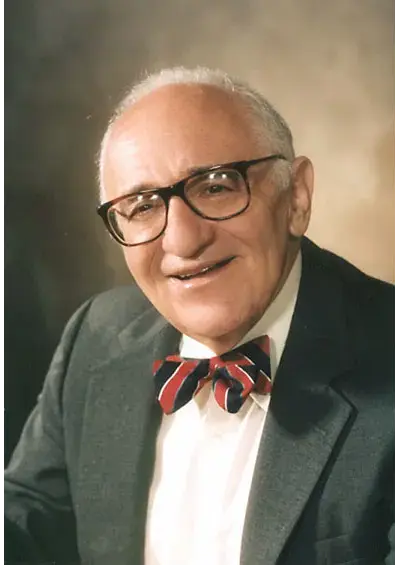
Murray Newton Rothbard was an American heterodox economist of the Austrian School, economic historian and political theorist. Rothbard was the founder and leading theoretician of anarcho-capitalism, a staunch advocate of historical revisionism and a central figure in the 20th-century American libertarian movement. He wrote over twenty books on political theory, revisionist history, economics, and other subjects.
