M. S. Swaminathan Quotes
Land tenure is key to protecting land rights. The Central and State governments should have accessible systems for registering, tracking and protecting land rights, including customary rights and common property resources.
Swaminathan, M. S. Serving Farmers and Saving Farming: Fifth and Final Report. National Commission on Farmers, Ministry of Agriculture, Government of India, 2006, p. 73.


In Burundi, family land is divided among the male children of a family. The average Burundian woman has 6.3 children at that time, nearly triple the international fertility rate. With this population growth rate, the plots of land for each person inevitably get smaller and smaller over time. At 10,745 square miles, Burundi is slightly smaller than the U.S. state of Maryland, but it holds nearly twice as many people: about 10 million. The small plots of land are inefficient to farm and provide subsistence. So the nation was in a crises as there was little industrialization and land was essential for existence for most Burundians. See {35807} and {35808}.

His bill introduced in the House of Representatives. It did not pass.


The Romans were very organized regarding land ownership. When they conquered Africa, defeating Carthage, they found no written records of land ownership, no deeds, no bills of sale. Therefore, they opened up the entire land mass of Africa for what amounted to public colonization where the land could be worked and claimed legally. Illiterate Africans had no written records, and most areas where under the control of a strongman who “owned” all of the land with no notion of private ownership of land.


Use included renting it. What he opposed was simply holding land when whites were driving Indians off their lands because all the unused land outside of the reservation was owned by someone and the asking price was very high. Ingersoll was considered to be the greatest orator and political thinker of his day, but his overt atheistic views curtailed his elected political career.
In every society where there had been past unjust ownership of land, all efforts of land reform were faced with the problem of having to dispossess the current “owners” who themselves had not been guilty of the crimes of their ancestors in unjustly obtaining the land originally. In America land reform was unworkable in most cases and the solution was usually a large monetary payment as compensation for the land.


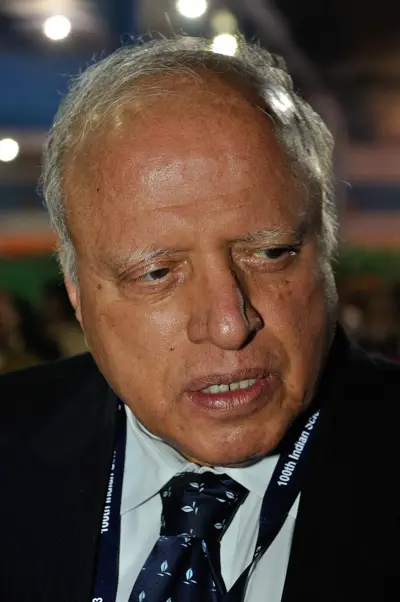
Mankombu Sambasivan Swaminathan is an Indian geneticist and administrator, known for his role in India's Green Revolution, a program under which high-yield varieties of wheat and rice were planted. Swaminathan has been called the "Father of Green Revolution in India" for his role in introducing and further developing high-yielding varieties of wheat in India. He is the founder of the MS Swaminathan Research Foundation. His stated vision is to rid the world of hunger and poverty. Swaminathan is an advocate of moving India to sustainable development, especially using environmentally sustainable agriculture, sustainable food security and the preservation of biodiversity, which he calls an "evergreen revolution."
