Frederick Douglass Quotes
Judging from my own observation and experience, I believe these holidays to be among the most effective means, in the hands of slaveholders, of keeping down the spirit of insurrection among the slaves. To enslave men, successfully and safely, it is necessary to have their minds occupied with thoughts and aspirations short of the liberty of which they are deprived. A certain degree of attainable good must be kept before them. These holidays serve the purpose of keeping the minds of the slaves occupied with prospective pleasure, within the limits of slavery
The “holidays” were a given by most slaveholders for a few days a year. During these times, liquor was usually provided to the slaves and they were encouraged to get drunk end engage in singing, dancing, sports, and social and sexual activities. See {611086} for details about slave holidays and encouraged alcohol use.
Frederick Douglasss, ~1817-1895, Abolitionist & Editor, Recorder of Deeds, District of Columbia, U. S. Minister to Haiti, My Bondage and Freedom
Sourced by: Eigen's Political and Historical Quotations

Douglass was also of the opinion that slavery could not continue without alcohol. See {632445}.

The slaves to which he is referring were the serfs of Slovakia who for hundreds of years had literally been the property of the Hungarian nobility. The problem however has been observed about any long-term slavery.


He was making a generalization based on his historical study of nations and societies.


In 1831 a slave preacher, Nat Turner, led a rebellion in North Carolina killing over 50 white men. Even though Turner and the rebels were captured and executed, whites throughout the South, took vengeance on any slaves they could find.
This fear was great among many who were abolitionists as potentially there might be mass slaughter of all Southern whites.


Louis Napoleon Bonaparte. The “colonies” to which we was referring were the French Colonies in the Caribbean—particularly Haiti. The Black slaves had revolted against the slave-owners and had taken over all positions of authority and wore the uniforms and symbols of power including the epaulettes—the gold braid shoulder pieces that were symbols of high rank in military and diplomatic uniforms which were worn on all official occasions. Napoleon never did make good on his vow. He had many more problems with his own wars and governance in Europe. This quote does demonstrate the racism that existed in supposedly tolerant France.


Hopkins was complaining about the fact that England could tax the colonies and thereby take their property without their consent made the American colonists in the “miserable condition of slaves.” Essentially the fundamental complaint of the Americans was this and in a decade it would erupt as the American Revolution. At the same time, Hopkins was a slave owner and yet saw nothing wrong with that.
The Reference to St. Domingo refers to the slave rebellion in Haiti, the first major, and successful slave revolt in the Western Hemisphere. The revolution was characterized by the revenge taken against the former slave masters. Thomas Jefferson, then the President, refused to recognize the new government and actually boycotted it. He and most Americans at the time were fearful that a slave revolt in the U. S. would produce revenge attacks against former masters, and indeed the national government supported the slave owners in subjugating all attempted armed rebellion. This reached its zenith in the Federal troops putting down the John Brown attempted revolt at Harpers Ferry. Instead of the bloodshed of a slave revolt, America experienced the bloodshed of a Civil War.


In early New England the General Court served as both a legislature and a judiciary before separation of powers was introduced. 5 years later the Court banned importing African slaves at all. While slavery was not common in Rhode Island, the laws was not seriously enforced on those who would defy them. It does represent a public anti-slavery sentiment that existed in Early America. It would take 200 years for Rhode Island to finally eliminate all forms of slavery.
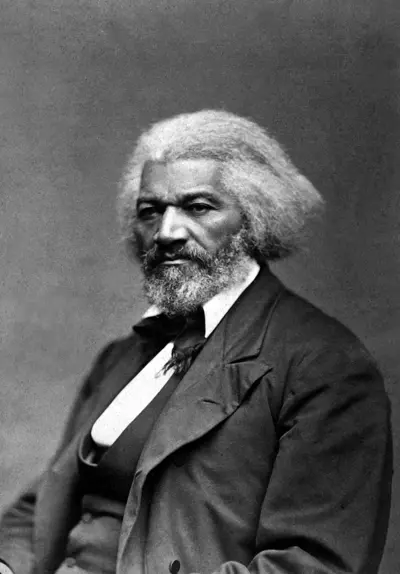
- Born: February 14, 1817
- Died: February 20, 1895
- Nationality: American
- Profession: Abolitionist, Suffragist, Author, Editor, Diplomat
Frederick Douglass was an American social reformer, abolitionist, orator, writer, and statesman. After escaping from slavery in Maryland, he became a national leader of the abolitionist movement in Massachusetts and New York, becoming famous for his oratory and incisive antislavery writings. Accordingly, he was described by abolitionists in his time as a living counterexample to slaveholders' arguments that slaves lacked the intellectual capacity to function as independent American citizens. Likewise, Northerners at the time found it hard to believe that such a great orator had once been a slave.
