Nathan Bedford Forrest Quotes
I've got no respect for any young man who won't join the colors.


Public opinion in the Union was quite different and more complex. Eggleston was an accomplished writer who had served in the Confederate army of the Civil War. 20 year after the war he wrote a series of articles for the prestigious Northern Atlantic Monthly trying to convey the war from the Southerner’s point of view.


The Shakers were an American religion and pacifists Lincoln learned. He was so impressed with their sincerity and way of life that he exempted Shaker men from the draft—the first conscientious objectors formally recognized in America. However, Lincoln made the statement to the Shakers which greatly impressed them and caused much reflection. Quakers had been pacifists also, but until the Civil War Draft there was no mechanism to test.

This quotation is a wonderful illustration of the change that has taken place in the American military. The young man who was not skilled enough for anything else was meant to be a soldier. By 2010 only one in four high school graduates would be skilled and intelligent to be qualified for the Untied States Navy. The other services also had high requirements in order to function with the high technology, of the modern military.


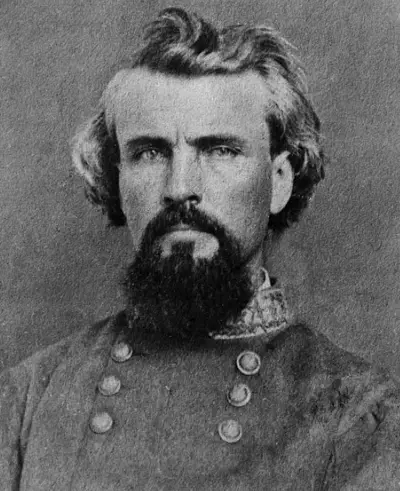
Nathan Bedford Forrest was a prominent Confederate Army general during the American Civil War and the first Grand Wizard of the Ku Klux Klan from 1867 to 1869. Before the war, Forrest amassed substantial wealth as a cotton plantation owner, horse and cattle trader, real estate broker, and slave trader. In June 1861, he enlisted in the Confederate Army and became one of the few soldiers during the war to enlist as a private and be promoted to general without any prior military training. An expert cavalry leader, Forrest was given command of a corps and established new doctrines for mobile forces, earning the nickname "The Wizard of the Saddle". His methods influenced future generations of military strategists, although the Confederate high command is seen by some commentators to have underappreciated his talents. Although scholars generally acknowledge Forrest's skills and acumen as a cavalry leader and military strategist, he has remained a controversial figure in Southern racial history for his main role in the massacre of several hundred Union soldiers at Fort Pillow, a majority of them black, coupled with his role following the war as a leader of the Klan.
