Aristotle Quotes
It would then be most admirably adapted to the purposes of justice, if laws properly enacted were, as far as circumstances admitted, of themselves to mark out all cases, and to abandon as few as possible to the discretion of the judge.
Aristotle. Aristotle's Treatise on Rhetoric. Translated by Theodore Alois Buckley, Henry G. Bohn, 1850, p. 2.


Many of our Founding Fathers held the view that the Jurors should decide not only about the facts but also they have the final decision on the law. The concept of the jury not following the judge’s interpretation and instructions as to the law is called Jury Nullification of which many of the founders approved. In modern times however, most states require the jury to accept the judge’s instructions as to the law, and the Jury’s only role is to decide on the facts. Maryland is the only state left which allows the jury to make the final decision on the law as well as the facts. However, many jurors will silently nullify the Judges instructions and vote accordingly as jurors need not explain their reasoning in most jurisdictions. See {641742}, {590841}, {591140} & {591139} for similar views by other Founding Fathers.


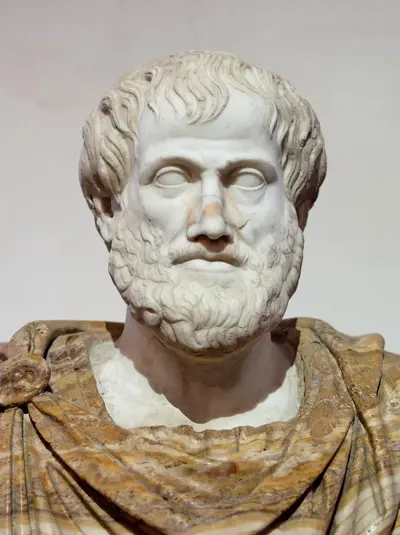
Aristotle (/ærɪˈstɒtəl/; Greek: Ἀριστοτέλης Aristotélēs, pronounced [aristotélɛːs]; 384–322 BC) was a Greek philosopher and polymath during the Classical period in Ancient Greece. Taught by Plato, he was the founder of the Lyceum, the Peripatetic school of philosophy, and the Aristotelian tradition. His writings cover many subjects including physics, biology, zoology, metaphysics, logic, ethics, aesthetics, poetry, theatre, music, rhetoric, psychology, linguistics, economics, politics, meteorology, geology and government. Aristotle provided a complex synthesis of the various philosophies existing prior to him. It was above all from his teachings that the West inherited its intellectual lexicon, as well as problems and methods of inquiry. As a result, his philosophy has exerted a unique influence on almost every form of knowledge in the West and it continues to be a subject of contemporary philosophical discussion.
