Charles Darwin Quotes
It is those who know little, not those who know much, who so positively assert that this or that problem will never be solved by science.
Charles Darwin, 1809-1882, English Scientist, The Descent of Man, 1871
Sourced by: Eigen's Political and Historical Quotations

This statement as with others like it offended the religious authorities of the time as they claimed that they—-The Bible---knew everything important just as fundamentalist Muslims claim today about the Koran. So statements of this kind were considered heresy by some and still are.


Coburn advocated Congress appropriating money for research and then staying out of the details of how the research is conducted and which scientific or medical problems are researched.

This was in 1945 where the number of research studies published each month was large compared to the past but a tiny fraction of what it would be just 50 years later.

Most scientists do not have the skill or the totality of knowledge to accurately predict the effect of scientific research and learning on society. Many are not interested. Those who try to communicate with politicians and the public are usually met with indifference or suspicion. Above all, the scientific and mathematical literacy of the public is so weak, that it is impossible in much of science to even explain the science to the lay public much less explain its implications. Soddy was a bit of an idealist from a class society and he felt the upper classes should be better informed by scientists.


Snow was one of the first people to call attention to problem of the intellectual gulf between most educated people and scientists. As politicians generally fall into the former group, they have had a particularly difficult time dealing with scientific issues since the scientific revolution of the 20th century produced this cultural chasm. See {635974} for one of his conclusions.


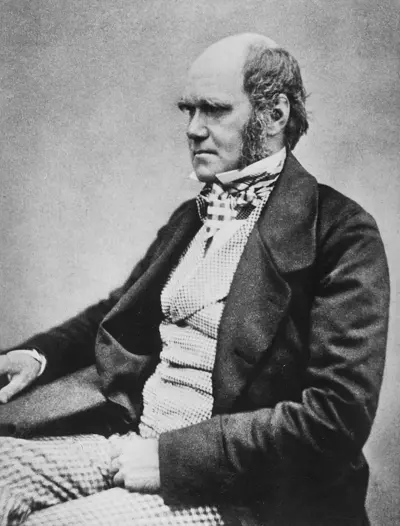
Charles Robert Darwin FRS FRGS FLS FZS was an English naturalist, geologist and biologist, best known for his contributions to the science of evolution.[I] His proposition that all species of life have descended over time from common ancestors is now widely accepted, and considered a foundational concept in science. In a joint publication with Alfred Russel Wallace, he introduced his scientific theory that this branching pattern of evolution resulted from a process that he called natural selection, in which the struggle for existence has a similar effect to the artificial selection involved in selective breeding. Darwin has been described as one of the most influential figures in human history, and he was honoured by burial in Westminster Abbey.
