Sarvepalli Radhakrishnan Quotes
It is the intense spirituality of India, and not any great political structure or social organisation that it has developed, that has enabled it to resist the ravages of time and the accidents of history.
Radhakrishnan, Sarvepalli. Indian Philosophy, Vol. 1. George Allen & Unwin, 1923, p. 25.


an old term for Muslims The Muslims were present in every state if India. Jinnah’s concept of nationhood is very Islamic in that Muslims are united even if they be in different states of nations. He was arguing to reserve some states as Muslim states by designation. 7 years later he would insist on a separate homeland. India was partitioned and Pakistan and Bangladesh resulted but at a fearful cost of tens of millions of lives.
He was arguing to reserve some states as Muslim states by designation. 7 years later he would insist on a separate homeland. India was partitioned and Pakistan and Bangladesh resulted but at a fearful cost of tens of millions of lives.

This mode of national definition is characteristic of many nations of Europe as well.

The Japanese saw their growth and standard of living dependent on foreign governments as the Japanese, then as now, imported the bulk of their raw materials, energy and much food. As a result of the Japanese aggression and invasion of China the United States and other nations began to cut off sales to Japan. Rather than curtail the aggression in China, Pearl Harbor was the tragic Japanese response.


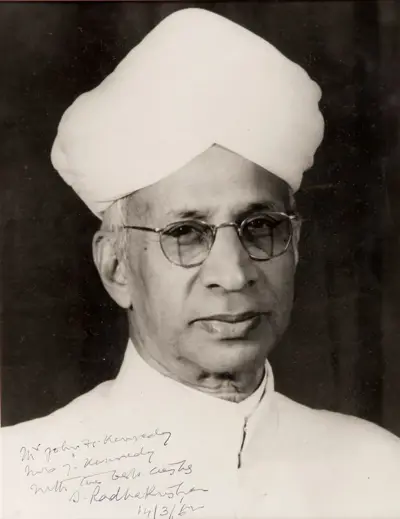
In April 1909, Radhakrishnan was appointed to the Department of Philosophy at the Madras Presidency College. Thereafter, in 1918, he was selected as Professor of Philosophy by the University of Mysore, where he taught at its Maharaja's College, Mysore. By that time he had written many articles for journals of repute like The Quest, Journal of Philosophy and the International Journal of Ethics. He also completed his first book, The Philosophy of Rabindranath Tagore. He believed Tagore's philosophy to be the "genuine manifestation of the Indian spirit". His second book, The Reign of Religion in Contemporary Philosophy was published in 1920.
