Paul Brest Quotes
It is simply not possible ... to determine the adopter’s specific intentions.
The delegates to the 1787 Constitutional Convention were all men with different opinions. So the intent of the Framers might mean: The intent of the individual who proposed the section, the men who spoke on that section, the majority who voted to keep it in the document. This would be hard enough if there were a transcript of the debate, but there was not. We only have the notes of Madison and a few others at different times. And even they did not know the intentions on a given issue of delegates who did not speak. George Washington, for example, never spoke for or against any particular section of the Constitution. We can infer his intentions from other writings sometimes, but what about the delegates who did not write as much or whose letters and papers have not been found or preserved? The judges who must decide on constitutionality do the best that they can, and there is ALWAYS disagreement when judges make such a judgments and render an opinion.
Paul Brest, Constitutional Law Scholar, Dean, Stanford University Law School, President, William and Flora Hewlett Foundation, Comment on the difficulty of knowing the original intent of the Constitutional Framers, “Who Decides?” 58 Southern California Law Review, 1985
Sourced by: Eigen's Political and Historical Quotations


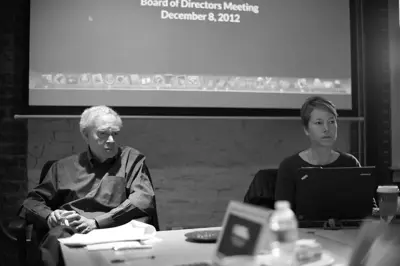
Paul Brest (born c. 1940) is an American scholar of constitutional law, a former president of the William and Flora Hewlett Foundation, and a former dean of Stanford Law School. He is an influential theorist on the role of non-profit organizations in society, and is widely credited with coining the name originalism to describe a particular approach to interpreting the United States Constitution.
