Maurice Maeterlinck Quotes
Is not every action of Hamlet induced by a fanatical impulse, which tells him that duty consists in revenge alone? And dose it need superhuman efforts to recognize that revenge never can be duty? I say again that Hamlet thinks much, but that he is by no means wise.
Maeterlinck, Maurice. Wisdom and Destiny. Translated by Alfred Sutro, Dodd, Mead and Company, 1898, p. 116.


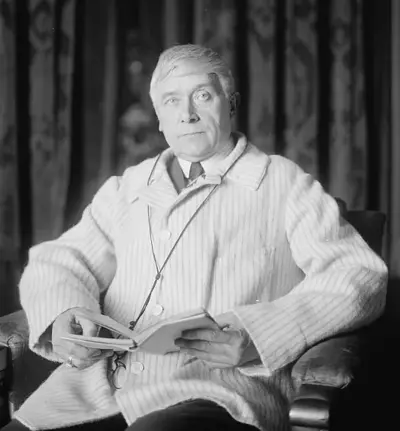
Maurice Polydore Marie Bernard Maeterlinck, also known as Count (or Comte) Maeterlinck from 1932, was a Belgian playwright, poet, and essayist who was Flemish but wrote in French. He was awarded the Nobel Prize in Literature in 1911 "in appreciation of his many-sided literary activities, and especially of his dramatic works, which are distinguished by a wealth of imagination and by a poetic fancy, which reveals, sometimes in the guise of a fairy tale, a deep inspiration, while in a mysterious way they appeal to the readers' own feelings and stimulate their imaginations". The main themes in his work are death and the meaning of life. He was a leading member of La Jeune Belgique group and his plays form an important part of the Symbolist movement.
