Jesselyn Radack Quotes
Instead of focusing on Snowden and shooting the messenger, we should really focus on the crimes of the NSA [National Security Agency]. Whatever laws Snowden may or may not have broken, they are infinitesimally small compared to the two major surveillance laws and the 4th Amendment to the Constitution that the NSA violated.
Snowden, was a contract worker for Booz Allan assigned to the National Security Agency (NSA). He felt that some of the NSA activities were illegal and unethical and tried to complain to NSA officials who rebuffed him. Despite the fact that he had signed an agreement not to do so, he copied many critical, classified documents that exposed much of the NSA activities that the NSA officials had denied existed—including lying under oath to the Senate. He then made many of them public, violating his oath, breaking the law, and opening up an entire area of government spying which most Americans knew nothing about and about which senior government officials had lied under oath to Congress. They of course wanted to prosecute Snowden who had told the truth, while they had lied. For many Americans, this became a moral and ethical conundrum.
Jesselyn Radack, Ethics adviser to the United States Department of Justice, Whistleblower, “100 Leading Global Thinkers”, Foreign Policy, December 2013
Sourced by: Eigen's Political and Historical Quotations


to enhance its ability to conduct surveillance

The NSA had been publicly exposed (by the Edward Snowden leaks) as collecting data on virtually every American’s phone and on-line conversation, and criticism was rampant.


Major leaks made public the fact that the NSA was hacking into the European and other foreign servers of Google, Microsoft and other technology companies and vacuuming up 500 million internet communications every day. (It would be illegal for them to do this in the United States, but via the outside USA servers they capture the information of US Citizens sending E-mail within the United States. The reaction of many foreign government was outrage as their citizen’s private communications were being captured as well. They began to take steps to curtain their country’s high utilization of American company data storage and transmission and regulate the American firms much more extensively. So American company business and profits were damaged by the NSA surveillance programs which the companies did not know about.
Snowden, was a contract worker for Booz Allan assigned to the National Security Agency (NSA). He felt that some of the NSA activities were illegal and unethical and tried to complain to NSA officials who rebuffed him. Despite the fact that he had signed an agreement not to do so, he copied many critical, classified documents that exposed much of the NSA activities that the NSA officials had denied existed—including lying under oath to the Senate. He then made many of them public, violating his oath, breaking the law, and opening up an entire area of government spying which most Americans knew nothing about and about which senior government officials had lied under oath to Congress. They of course wanted to prosecute Snowden who had told the truth, while they had lied. For many Americans, this became a moral and ethical conundrum.


Snowden, was a contract worker for Booz Allan assigned to the National Security Agency (NSA). He felt that some of the NSA activities were illegal and unethical and tried to complain to NSA officials who rebuffed him. Despite the fact that he had signed an agreement not to do so, he copied many critical, classified documents that exposed much of the NSA activities that the NSA officials had denied existed—including lying under oath to the Senate. He then made many of them public, violating his oath, breaking the law, and opening up an entire area of government spying which most Americans knew nothing about and about which senior government officials had lied under oath to Congress. They of course wanted to prosecute Snowden who had told the truth, while they had lied. For many Americans, this became a moral and ethical conundrum.

The reason this quotation is famous is that Clapper answered “No, Sir”. 3 months later Edward Snowden disclosed the fact that the NSA was collecting some information from EVERY telephone call and e-mail made or sent in the United States. The colloquy became famous when the government tried to capture Snowden and try him for illegally revealing classified information when others saw him as a whistle blower who had told the truth and the guys who lied to Congress and the American people wanted to prosecute him.

Edward Snowden, a defense contractor and government employee, publicly revealed that the U. S. intelligence agencies were intercepting and keeping a data base of ALL telephone calls and all Internet e-mails. The government had denied that this was so, and had classified the domestic spying program as Top Secret. Snowden had signed an agreement not to reveal any classified information, and he violated the agreement. Therefore the government was trying to extradite Snowden from Russia at the time so that they could criminally prosecute him. However, there was great debate as to whether the spying on all Americans was legal and Constitutional. Many saw Snowden as a “whistleblower” and pointed out that the government which had lied wanted to prosecute Snowden for telling the truth. Fein, an attorney, was representing Snowden and his family.

See {635177} for the event that triggered the statement.


Critics of NSA observe that there is a fundamental difference between government invasion of privacy and that of corporations in that the Government can deprive a citizen of his/her liberty or even life while corporations can just invade their privacy, embarrass them, or hurt their economic status. Counter-critics rejoinder is that 99 percent of all the specific abuses of privacy and damages to citizens in the U. S. from massive data collection are made by private corporations, not the NSA or other government agencies.

He was the Chairman of the Senate Judiciary Committee.
He was the Chairman of the Senate Judiciary Committee.

He was referring to the massive surveillance NSA program whereby all telephone calls and most digital communications for every American was secretly tapped and stored in an NSA data base. The Senators of the Intelligence Oversight Committee received information in Classified executive sessions but they were not allowed to disclose anything that they learned in the briefings—even something as huge and probably unconstitutional as this program. Moreover, even when officials of the Intelligence Services lied under oath (see {634917}) in open session, the Senators could not disclose this fact.
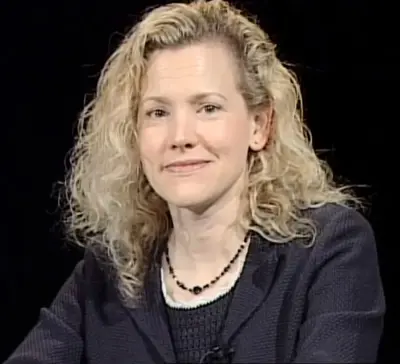
Jesselyn Radack is an American national security and human rights attorney known for her defense of whistleblowers, journalists, and hacktivists. She graduated from Brown University and Yale Law School and began her career as an Honors Program attorney at the U.S. Department of Justice.
