Pankaj Mishra Quotes
Indonesia is hardly immune to catastrophic breakdowns, as the anti-Communist pogrom showed. But, like India, it has been relatively fortunate in evolving a mode of politics that can include many discontinuities - of class, region, ethnicity, and religion.
Mishra, Pankaj. "Indonesia: The Great Exception." The New York Review of Books, 20 Nov. 2014.


Theological & Legal Expert. A fatwa is a religious legal ruling


Throughout the history of American Slavery, the Southern apologists for slavery have accused abolitionists and anyone opposed to slavery of being Communists, Atheists, or any other group that was generally unpopular in the day. This is one of the early instances where that heinous practice was started. However it continued and became especially virulent, in the Civil Rights movement of the 1960s where anyone who opposed segregation was accused by Southern Segregationists of being Communists and Atheists as well as other unpleasant epithets. Most religious Americans opposed slavery in the 1850s but there are some in the South, like this Preacher, who seemed totally ignorant of the strong pro abolitionist views of the many religious leader abolitionists in the North and a few in the South.


While this is very true in the long term, the Church in the short term has almost always supported actively or by its neutrality, the ruling class as opposed to those who would make revolutionary change even to the extent of participating in the torture, murder, and intimidation of most of the Catholics in the society. The ruling class, in turn, supported the Church and used the power of the state to enforce religious doctrine and prevent alternative religious views and practices to prevail even if only with small minorities. See {632407} for another Mises quotation articulating examples of this.
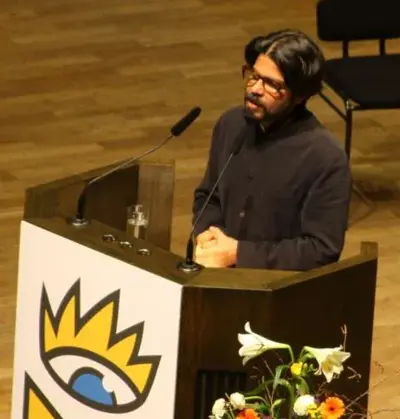
Pankaj Mishra is an Indian essayist and novelist and a recipient of the 2014 Windham–Campbell Prize for non-fiction.
