Amitava Kumar Quotes
In the U.S., the FBI or the people I met from the Department of Justice might be ignorant about Islam or about the East more generally, but I felt they were less willing to make blanket judgments about Muslims. This caution was less evident with some of the authorities I met in India.
Kumar, Amitava. A Foreigner Carrying in the Crook of His Arm a Tiny Bomb. Duke University Press, 2010.


The inscrutability of the “oriental” was not racial as Nicholson and many others thought as most Asians who became Westernized tend to behave and respond to the Western culture in which they were brought up. However, many of the “oriental” cultures place a premium on inscrutability and avoidance of candor. Therefore, often they interact with Westerners and are unsure of the certainty of what they hear and observe. Or they hear it in ways that in their culture would not indicate strong feeling when that was intended by the Westerner. For example, Arab oratory tends to repeat something intensely felt several if not many times. A Western Diplomat who thinks he “makes himself clear” might slow down and emphasize each word distinctly—a sign of strong emphasis in Western oratory—but if only stated once or twice might not be taken as seriously meant. So communicating between cultures has often caused difficulties which people have assumed were racial characteristics but were cultural.


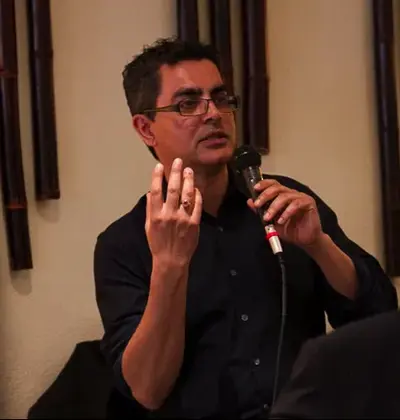
Amitava Kumar is an Indian writer and journalist who is Professor of English on the Helen D. Lockwood Chair at Vassar College.
