Richard Benjamin Quotes
In the pioneer West Whitopias, immigration tended to be the dominant social and racial issue. In Forsyth County, Georgia, immigration is still an issue, but because you have that complicated history of the Trail of Tears and slavery and Jim Crow, the Whitopia has a different flavor.
Benjamin, Rich. Interview by Michel Martin. "Searching For 'Whitopia'." Tell Me More, NPR, 6 Oct. 2009.


This quotation illustrates how the racist South defeated the objectives of the Civil War and Reconstruction by the institution of Jim Crowe laws and so called “states’ rights”. It would take more than another half century for the Yankees and the vast majority of the non-Southern Americans decided that the Southerners could no longer “do as they pleased” with fellow human beings. It is hard to believe for us today that an entire section of our country could actually believe in the morality of the South but that is the tragic history of race relations in America.


The response was supposedly to the President’s question of the feasibility of using the Navy to remove the Negro soldiers to another land. See {590147}. This quotation’s authenticity and accuracy are challenged by many scholars. The only source is the personal reminiscences of General Butler, a politician with Presidential aspirations who had his own agenda. The nuance of wording is very critical as to whether Lincoln was trying to accomplish export or whether he was asking Butler to staff out the feasibility so that Lincoln could deal with others who had raised the issue. There is no record of his having asked anyone in the Navy to staff out such a proposal, and the Secretary of the Navy at the time, Gideon Wells kept a detailed diary. Butler’s conclusion that 150,000 people could not be transported fast enough to exceed the breeding rate of those Blacks remaining also is challenged by many, especially if the Navy and the Merchant Service were both used. This casts even more doubt on the accuracy of the quotations.

This marvelous quotation gives us a picture of the essence of the conflict in conception of freedom between Southern whites and negroes. There was no way to change the large majority of whites’ opinions and it is easy to see why Jim Crow and Southern discrimination evolved as it did. The emancipated Blacks had insufficient power or resources and there was not enough effort or success at changing white attitudes and no where near enough law enforcement to impose the view on the majority of the Southern white population.

See {625675}, {625686}, {625684}, {625682}, {625676} for additional quotations arguing for Black emigration.

Leading the debate which ended in the rejection of the United Daughters of the Confederacy to get a Congressional patent for their logo, which included an early Confederate flag:


His Indian Removal Policy forced Native American to leave their lands which were theirs by treaties signed by the United States and marched to the poorest land in Oklahoma where they were "resettled". This is often referred to as the "Trail of Tears". What made his actions evern wors was the fact that The Supreme Court had already ruled that such land belinged to the Cherokee Indian Tribe and the government of the United States may not force them from it. Jackson was the only President in Amrican History to defy a Supreme Court order.


See {625675}, {625686}, {625683}, {625682}, {625676} for additional quotations arguing for Black emigration.

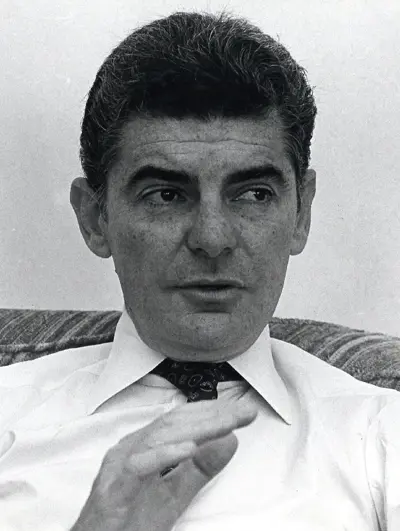
Richard Samuel Benjamin is an American actor and film director. He has starred in a number of well-known film productions, including Goodbye, Columbus (1969), based on the novella by Philip Roth; Catch-22 (1970), from the Joseph Heller best-seller; Westworld (1973), a science-fiction thriller by Michael Crichton; and The Sunshine Boys (1975), written by Neil Simon. After directing for television, his first film as director was the 1982 comedy My Favorite Year. His other films as director include City Heat (1984), starring Burt Reynolds and Clint Eastwood, The Money Pit (1986) with Tom Hanks, and Made in America (1993) with Whoopi Goldberg.
