Toni Morrison Quotes
In the McCarthy era, people were losing their jobs--there was this blanket feeling that no one should not say anything about anything, McCarthy and his people were just sitting around calling meetings, calling up people before them, and ruining their lives.
Toni Morrison, Author, Reflection on President George W. Bush’s call to Americans in the wake of the attack of September 11, “Race, Politics & Culture,” The Nation Institute, March 24, 2004, C-SPAN, April 11, 2004
Sourced by: Eigen's Political and Historical Quotations


A theater arts program that operated nationally under the WPA.

The Red Scare had affected much of the country. The House Un-American Activities Committee had frightened much of the country claiming that the Communists had infiltrated the government. But when facts and proof were demanded, all they came up with some workers in the Hollywood film industry who had gone to communist meetings and some who had joined the party before the War when The Great Depression was still plaguing the country. The Hollywood and TV executives caved in to the political demagogues and fired and blacklisted not only the communists but those who refused to testify. The actors and musicians could not work for several years until the country came to its senses, but the screenwriters wrote under false names. At least one Academy award was won that way.


Seeger had been a member of the Communist Party and had left it in 1950. See {635866}. He was later called before the House UnAmerican Activities Committee and asked to reveal the names of others who had been members. In those days of the red scare and McCarthyism, most people asked to name names and not wanting to do so “took the 5th Amendment” and could not be legally forced to reveal the names. Seeger as a matter of principle refused to plead the 5th Amendment because he was not afraid of incriminating himself and had done nothing criminal anyway. So he, a war veteran of WWII, instead refused to answer {635867} citing his First Amendment right of freedom of association. There was no legal precedent for this, and he was indicted and convicted for Contempt of Congress. However, his conviction was overturned as unconstitutional by the U. S. Federal Appeals court. Seeger had prevailed legally. But in retaliation Seeger was blacklisted and none of the radio of TV networks or Hollywood Studios would allow him (and other blacklisted artists) to appear. Today most Americans view what McCarthy, The Congressional Committee, the networks, and Hollywood studios had done as contemptible.


H. S. Tsien was one of the founders of the Jet Propulsion Laboratory and one of the major technical leaders of the American Space and Missile Programs. In the Red Scare of the 1950s some nativist conservative members of Congress and others managed to get his security clearance removed on the grounds that he had Communist Sympathies. Like many other American Citizens, he disapproved of the Chinese dictator Chiang Kai-shek even though Chiang was the anti-Communist bulwark in China. Since his work was space and missiles, he had little professional to do and when Chiang Kai-shek was defeated in China and pushed to Taiwan, H. S. Tsien ended up going to China and starting their rocketry program. (He is known as the “Father of Chinese Rocketry”). He is the only scientist who was an early leader in the space programs of two different nations. Kimball, whose naval missiles were all in part developed by H. S. Tsien’s work, was furious, but at the time with McCarthyism riding high, his criticism was met by accusations that he was a Communist sympathizer.
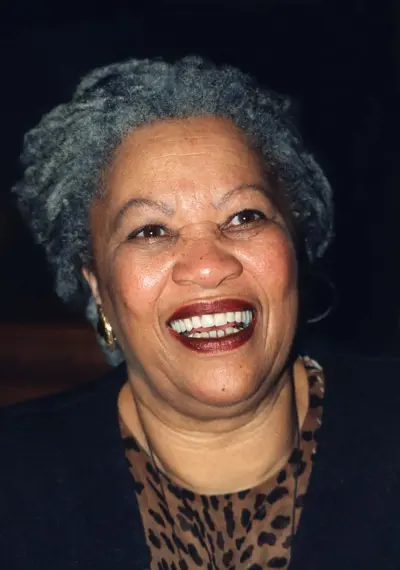
Chloe Anthony Wofford Morrison, known as Toni Morrison, was an American novelist, essayist, book editor, and college professor. Her first novel, The Bluest Eye, was published in 1970. The critically acclaimed Song of Solomon (1977) brought her national attention and won the National Book Critics Circle Award. In 1988, Morrison won the Pulitzer Prize for Beloved (1987); she gained worldwide recognition when she was awarded the Nobel Prize in Literature in 1993.
