Martin Feldstein Quotes
In short, both experience and economic theory imply that the US could now t to a more competitive dollar without experiencing either increased inflation or decreased economic growth.
Feldstein, Martin. "The Case for a Competitive Dollar." Martin Feldstein, Harvard University, 2006.


“Pegged” exchange rates are a country’s money where the Government sets the value of the money in terms of some other currency—usually American dollars. The advantage of a pegged currency is that it is stable and does not fluctuate day to day. The disadvantage is that people realize that the value is artificial and other countries will not accept the pegged currency. Worse natives try and get as many dollars as they can because the fear that the Government will devalue and change the rate of exchange of the pegged currency.


FDR was then a candidate for the Democratic Vice Presidential Nomination. This statement shocked some of the conservative French and British delegates and officials such as Ramsay MacDonald, Georges Bonnet, and Neville Chamberlain, but economist John Maynard Keynes strongly approved of Roosevelt Roosevelt’s statements. At issue was whether or not the major currency powers should confer frequently and set the international currency exchange rates or should the rates float and be determined at any point by the free market in currency. FDR held the latter view which was opposed to the positions of the conservative banker-oriented delegates from the European counties, However Roosevelt’s statement was considered “harsh” and “vituperative” by the conservatives and the entire conference collapsed over them. FDR admitted that perhaps he had been too strong and blunt in his language. An irony of this quotation is that 80 years later the positions of liberals and conservatives had both flip-flopped. It became the conservatives who adopted the FDR free market for currency exchange while many liberals called for government intervention and agreement on exchange rates to prevent instability.
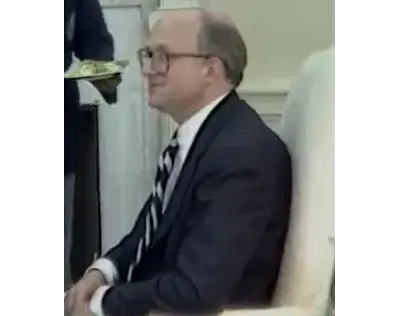
Martin Stuart Feldstein was an American economist. He was the George F. Baker Professor of Economics at Harvard University, and the president emeritus of the National Bureau of Economic Research (NBER). He served as President and Chief Executive Officer of the NBER from 1978 through 2008 (with the exception of 1982 to 1984). From 1982 to 1984, Feldstein served as chairman of the Council of Economic Advisers and as chief economic advisor to President Ronald Reagan (where his deficit hawk views clashed with Reagan administration large military expenditure policies). He was also a member of the Washington-based financial advisory body the Group of Thirty from 2003.
