Samuel Johnson Quotes
In order that all men may be taught to speak truth, it is necessary that all likewise should learn to hear it; for no species of falsehood is more frequent than flattery, to which the coward is betrayed by fear, the dependent by interest, and the friend by tenderness: those who are neither servile nor timorous are yet desirous to bestow pleasure; and, while unjust demands of praise continue to be made, there will always be some whom hope, fear, or kindness will dispose to pay them.
Johnson, Samuel. The Rambler. Vol. 5, J. Payne and J. Bouquet, 1752, p. 109.


Cromwell is often credited with coining the phrase “warts and all.” This is not strictly correct. The phrase that could be extracted from his quotation is “warts and everything”. Over the years writers and editors have, as is not uncommon, “improved” the phraseology and it is the “improved” version with which most people are familiar, even though it is not 100 percent authentic. The meaning is however, and for this Cromwell is the first known originator.

He had a relatively unique distinction for a white man who interacted with Indians. The Delaware found his honesty on all subjects so unusual, that they had a special ceremony to name him. As a result, he was able to keep the Delaware from becoming allies of the British in the American Revolution.


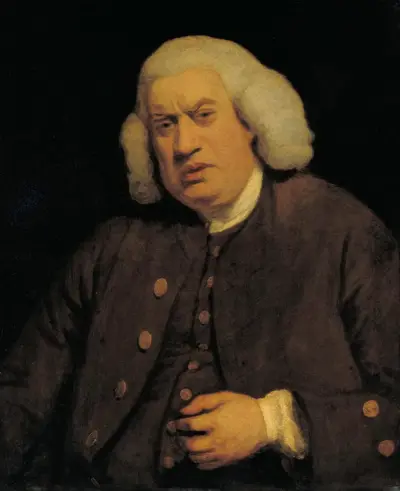
Samuel Johnson, often referred to as Dr Johnson, was an English writer who made lasting contributions to English literature as a poet, playwright, essayist, moralist, literary critic, biographer, editor, and lexicographer. Religiously, he was a devout Anglican, and politically a committed Tory. The Oxford Dictionary of National Biography describes Johnson as "arguably the most distinguished man of letters in English history". He is the subject of James Boswell's The Life of Samuel Johnson, described by Walter Jackson Bate as "the most famous single work of biographical art in the whole of literature".
