Selman Waksman Quotes
In learning to utilize antibiotics for the control of human and animal diseases, the medical and veterinary professions have acquired powerful tools for combating infections and epidemics.
Waksman, Selman A. "Streptomycin: Background, Isolation, Properties, and Utilization." Nobel Lectures, Physiology or Medicine 1942-1962, Elsevier Publishing Company, 1964, p. 388.


This quotation illustrates a little known fact about America’s infectious disease history. It also reveals one of the great skills of Eleanor Roosevelt: Her ability to see a program or project in its breadth of influence and potential benefits throughout the panoply of problems facing the nation. The health fact is that malaria was a major health hazard in parts of America in the middle of the 20th century. Actually, before that time, malaria was one of the top causes of death in America. As a result of technology and programs such as this one, malaria has been virtually eliminated as a mortality risk in America.

He is in charge of collecting and deploying the funds donated for infectious diseases from countries throughout the world. Each nation has its own budget cycle and the public health officials have to plan and act as soon as they learn that an epidemic is breaking out. The viruses and bacteria grow when they grow, not when budgets have planned for them.

He and the Fascist Italian government were very proud of this accomplishment which to them justified all the abuse, exploitation and denial of human rights that was inherent in Italian Colonialism then. The Fascists accomplished some worthy goals of governing like this one. American fascist admirers, of which there were many, pointed to these accomplishments in trying to persuade public opinion to adopt more right wing programs and measures.
Virtually every spread of virus caused disease that has occurred in the late 20th century and onward was spread to different regions by people, who in an age of rapid travel, are what the public health scientists call “the vectors” — the carriers of the disease. In earlier times it was animals like rats who spread the disease.
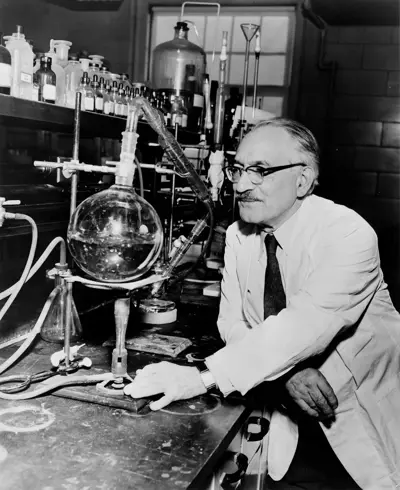
Selman Abraham Waksman was a Russian Empire-born Jewish-American inventor, biochemist and microbiologist whose research into the decomposition of organisms that live in soil enabled the discovery of streptomycin and several other antibiotics. A professor of biochemistry and microbiology at Rutgers University for four decades, he discovered a number of antibiotics (and introduced the modern sense of that word to name them), and he introduced procedures that have led to the development of many others. The proceeds earned from the licensing of his patents funded a foundation for microbiological research, which established the Waksman Institute of Microbiology located on the Rutgers University Busch Campus in Piscataway, New Jersey (USA). In 1952, he was awarded the Nobel Prize in Physiology or Medicine for "ingenious, systematic and successful studies of the soil microbes that led to the discovery of streptomycin." Waksman and his foundation later were sued by Albert Schatz, one of his PhD students and first discoverer of streptomycin, for minimizing Schatz's role in the discovery of streptomycin.
