Kenzaburo Oe Quotes
In Japan itself there have all along been attempts by some to obliterate the article about renunciation of war from the Constitution and for this purpose they have taken every opportunity to make use of pressures from abroad.
Oe, Kenzaburo. "Japan, the Ambiguous, and Myself." Japan, the Ambiguous, and Myself: The Nobel Prize Speech and Other Lectures, Kodansha International, 1995.

stating that war was obsolete See {640087} for the quotation of exactly what Angell wrote.


There are some conservatives who accused Brennan of altering the Constitution from the bench by his opinions. However, there is an unending debate as to how the constitutional interpreters should deal with concepts and reality that did not exist at the time of the Constitutional Convention and were unconcieved of. Some justices like Brennan believe that the principles of the Constitution should be extended and extrapolated to modernity. Others believe that in the absen?ce of specific language even Supreme Court just should not try and extrapolate. Both are reputable views and as time and technology march ahead, the issue is joined more frequently. For example, the Founding Fathers did not conceive of atomic weapons. But they insisted that Americans have the right to bear arms. An atomic bomb is a type of arm—a weapon of war and defense. Does an individual American have the right to have his own atomic bomb?


Neville Chamberlain is viewed in Britain as one of the worst appeasers of all time. He refused to fulfill the obligations of Great Britain when Hitler invaded parts of Europe. He appeased Hitler because he wanted to avoid war and is a historical icon of a person who would do anything to avoid war.


The suffragette movement was split by WWI and the issue of pacicism. See {621265} for the pro war factional view.
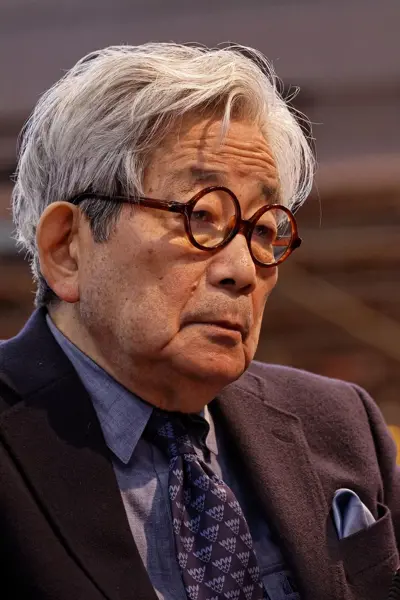
Kenzaburō Ōe is a Japanese writer and a major figure in contemporary Japanese literature. His novels, short stories and essays, strongly influenced by French and American literature and literary theory, deal with political, social and philosophical issues, including nuclear weapons, nuclear power, social non-conformism, and existentialism. Ōe was awarded the Nobel Prize in Literature in 1994 for creating "an imagined world, where life and myth condense to form a disconcerting picture of the human predicament today".
