Paul Goodman Quotes
In America you can say anything you want - as long as it doesn't have any effect.
Goodman, Paul. Growing Up Absurd: Problems of Youth in the Organized System. Random House, 1960.


Nixon’s views of free speech rights did not recognize the right of those who advocate revolution or government or system change in America. By his standard all of the Founding Fathers should not have been entitled to most of their early speeches. The Supreme Court repeatedly rejected his standard, distinguishing between speech to change or reform the government and illegal action to bring those changes about.


Samuel Langhorne Clemens, 1835-1910. Twain was referring to the social norms and customs which make us all edit our speech so that we do not hurt people unnecessarily or mislead someone. True freedom of speech of this kind would exist only if there were no social structure of morality. For almost all of us, the political freedom of speech is what we cherish. The right to say anything and to be edited only by ourselves and our own personal view of propriety is the political. See linked quote for his quotation about the social consequences of exercising freedom of speech.
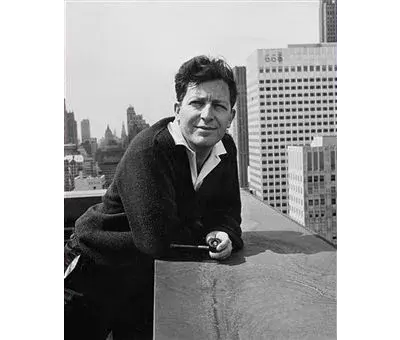
Paul Goodman (1911–1972) was an American author and public intellectual best known for his 1960s works of social criticism. Born to a Jewish family in New York City, Goodman was raised by his aunts and sister and attended City College of New York. As an aspiring writer, he wrote and published poems and fiction before attending graduate school in Chicago. He returned to writing in New York City and took sporadic magazine writing and teaching jobs, many of which he lost for his outward bisexuality and World War II draft resistance. Goodman discovered anarchism and wrote for libertarian journals. He became one of the founders of gestalt therapy and took patients through the 1950s while continuing to write prolifically. His 1960 book of social criticism, Growing Up Absurd, established his importance as a mainstream cultural theorist. Goodman became known as "the philosopher of the New Left" and his anarchistic disposition was influential in 1960s counterculture and the free school movement. His celebrity did not endure far beyond his life, but Goodman is remembered for his principles, outré proposals, and vision of human potential.
