Robert Harris Quotes
In a way I'm almost more rueful about the notion of having a non-ideological Labour party than I am about the personality of Tony Blair.
Farndale, Nigel. "Robert Harris: the ghost in the machine." The Daily Telegraph, Telegraph Media Group, 22 Sept. 2007.


Essentially Trollope claimed that English political parties are by their very nature, conservative, in the sense that they tend to resist great change. This has tended to be true in America and other democracies, but there are a number of exceptions. Where political parties are totally unsuccessful, they have little to lose. Likewise, when a political party becomes overwhelmingly dominant, it tends to overreach and try and make ideological change. However when there is true contest among the parties, they tend to be conservative in the sense that even if they are liberal parties, they do not move in extreme ways.


Before that both parties had liberals and conservatives in profusion. Many of the Democatic Party positions were very conservative. Roosevelt wanted the party to become the liberal and left wing policy. He was able to make the party economically liberal, but the worst of America’s racists were all Democrats at the time and stayed with the Democratic Party led the passage of the Civil Rights and Voting Rights Bill of 1963. The Republican Party then created a home for the racist Southern Democrats, who left the Democratic Party in anger.

A Tory party organizer called on Lord Mountbatten, assuming the aristocrat was a conservative, to sign a petition. 1st Earl Mountbatten of Burma


This was a new political phenomenon where a President was perceived as more important, more powerful, and preferable to his party. Note that the base of the scale is labeled “Public Opinion”.

Prevented by the Military from ever taking office. Although she won the Presidency overwhelmingly, the military refused to let her take office and established a right-wing military dictatorship holding her in house arrest for decades.


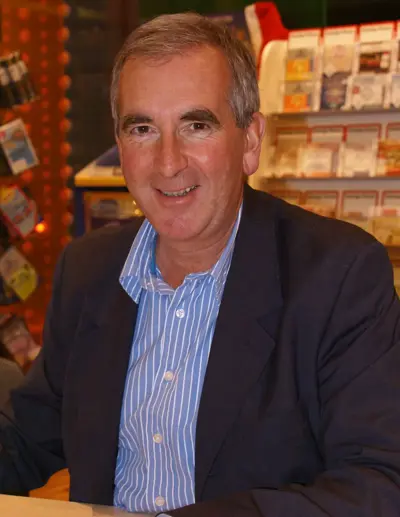
Robert Dennis Harris is an English novelist. He is a former journalist and BBC television reporter. Although he began his career in non-fiction, his fame rests upon his works of historical fiction. Beginning with the best-seller Fatherland, Harris focused on events surrounding the Second World War, followed by works set in ancient Rome. His most recent works centre on contemporary history. Harris was educated at Selwyn College, Cambridge, where he was president of the Union and editor of the student newspaper Varsity.
