Barbara Ehrenreich Quotes
I'm not questioning the monotheistic god. I think there's absolutely no evidence for the existence of such a god. When I say that, I mean I'm - part of that is that the idea that God could be all-powerful and also benevolent is on its face contradictory.
Ehrenreich, Barbara. Interview with Terry Gross. Fresh Air, NPR, 8 Apr. 2014.


This quotation is very interesting in the light of the so called “intelligent design” opponents of evolution. Darwin himself was by no means an atheist but he did not see the “hand of God in everything about him”. He did not maintain that a God could not have a hand in setting the laws of evolution which then produced all the species. However, the modern proponents of “intelligent design” insist that the evolutionary mechanism is so complex that God must have a role in the processes themselves. There are atheist evolutionists and evolutionists who believe that there was a God or prime mover setting the laws of science in motion, but all so called intelligent design enthusiasts are religious and believe that God is involved in the process. They reject the scientific method and their assertions are not subject to scientific proof or falsification. They are not scientists in contrast to the scientists who believe there was a God or prime mover initiating the process.


Amen ho tep IV. This Pharaoh adopted a monotheistic religion and imposed it upon Egypt where he could. However, as soon as he died, he was painted as a criminal for the heretical view of monotheism. It is not known whether he came upon the monotheistic concept independently or was influenced by the Jews who had first promulgated the idea. Some argue that Akhenaton was not a strict monotheist because for required the worship of the one God, Aten, but did not ban the worship of the other Egyptian gods though he personally, and his wife Nefertiti, were monotheistic.


Buckley was a very intelligent man who was very religious. It is ironic that while “conservatives” of the late 20th century tended to be religious conservatives, many of the conservative heroes were strongly anti-religious like Rand.


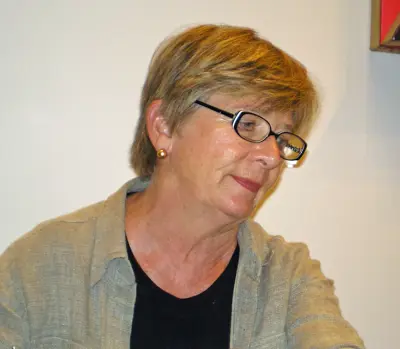
Barbara Ehrenreich is an American author and political activist who describes herself as "a myth buster by trade" and has been called "a veteran muckraker" by The New Yorker. During the 1980s and early 1990s she was a prominent figure in the Democratic Socialists of America. She is a widely read and award-winning columnist and essayist, and author of 21 books. Ehrenreich is perhaps best known for her 2001 book Nickel and Dimed: On (Not) Getting By in America. A memoir of Ehrenreich's three-month experiment surviving on minimum wage as a waitress, hotel maid, house cleaner, nursing-home aide, and Wal-Mart clerk, it was described by Newsweek magazine as "jarring" and "full of riveting grit," and by The New Yorker as an "exposé" putting "human flesh on the bones of such abstractions as 'living wage' and 'affordable housing'." She is a recipient of a Lannan Literary Award.
