Richard Pryor Quotes
I'm not for integration and I'm not against it.
Pryor, Richard, and Todd Gold. Pryor Convictions: And Other Life Sentences. Pantheon Books, 1995.


At the time, the Southern segregationists were all Democrats and they blocked any Democratic attempt to pass any Civil Rights legislation. When he could not get a Civil Rights commitment from his own party, Powell turned to the Republicans and the President wrote this letter. In return, in November, Powell endorsed and supported Eisenhower instead of Stevenson, his own party’s nominee. Eisenhower could not get any legislation on Civil Rights as the Southern Democrats would always block it. When President Lyndon Johnson finally forced the 1963 Civil Rights Act through the Congress, the racist Southern Democrats cut a deal with Goldwater and the conservative Republicans, and switched parties. Since then the Civil Rights stance of the two parties reversed. The Democrats were thereafter pro Civil Rights and the Republicans, the party of Lincoln and Reconstruction, thereafter reversed their Civil Rights position and opposed progress in this area.


Arkansas Governor Faubus ordered the national guard to prevent Black students from integrating Central High School in Little Rock. President Eisenhower was a man of action and not rhetoric and his lack of firm public statements overlooked an opportunity to use the Presidential “bully pulpit” and exercise his moral leadership and authority. Armstrong was irate at Eisenhower for appearing to do nothing and say nothing. See {615852}. When Eisenhower did enforce the court order and used Federal troops, Armstrong sent him this congratulatory telegram. His reference to walking into the schools was in support of many who suggested that the best thing the President could have done was to personally take one of the Black students by the hand and walk into the school with him or her. With the mood of the Southern racists, such an act was potentially very risky for the President and it is not known whether of not the President and his staff ever considered such an act.

Warren a Republican from California who knew Palmer for years, stood up, put his arm around Palmer and told him, “Kyle, you and I will always be friends” and walked out.

At the time racism and discrimination in the United States was not only rampant but legal. But change in many substrata of America was detectable and many intellectuals--writers, artists, scientists, educators, theologians, entertainers, groups who would later be called “elites” began to make themselves heard on the subject. Falkner was one whose novels had always taken an anti racist view point and now were overtly calling for political and social change.

This painting depicted a young black girl walking to school surrounded by 4 U. S. Marshalls protecting her from the crowd of white racists trying to prevent her from attending an elementary school under court order. The vicious race hatred that school integration revealed was the national problem that was then surfacing. The graphic is the illustration that appeared in Look with that name.
He was the first FHA administrator to make statements saying that non-discriminatory housing services should be available to the American people. At the time the Southern states had laws allowing and protecting legal segregation especially in housing. The Southern field staff interpreted his instruction to be sure that both blacks and whites had access to FHA services, but they used the “separate but equal” doctrine: Provide services to both races but always in segregated housing projects. This was typical of the kinds of problems that motivated the Civil Rights Acts offered by President Kennedy in 1963 and passed by President Johnson in 1964. See {637272} for a similar Mason statement.


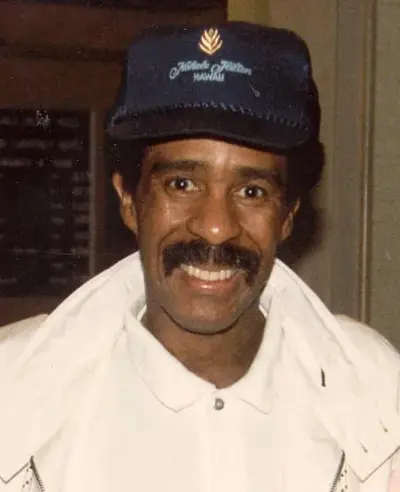
Richard Franklin Lennox Thomas Pryor was an American stand-up comedian, actor, and writer. He reached a broad audience with his trenchant observations and storytelling style, and is widely regarded as one of the greatest and most influential stand-up comedians of all time.
