David Lynch Quotes
I'm not a political person. I don't understand politics, I don't understand the concept of two sides and I think that probably there's good on both sides, bad on both sides, and there's a middle ground, but it never seems to come to the middle ground and it's very frustrating watching it and seemingly we're not moving forward.
Lynch, David. "David Lynch: 'We’re not moving forward'." Interview. The Guardian, 2017.


At the time Congress was gridlocked in bitter hyperpartisan conflict. Most people called for more comity and bipartisanship and most politicians wanted more bipartisanship but blamed the other party for the rift. Mourdock, arguing for less bipartisanship and no compromise defeated Richard Lugar in the Republican Senatorial Primary election. Lugar, one of the most respected and effective Senators was a statesman who worked with any and all to find effective compromises to reach national solutions. The nation was so politically polarized that the Republican Indiana voters ousted one of their most senior senators because he was effective at developing national solutions. See {626717} and {302706} for other Mourdock’s outrageous comments. While this rhetoric won in the Primary, it lost him the general election in a state where Republicans had a strong majority and should have had the seat.


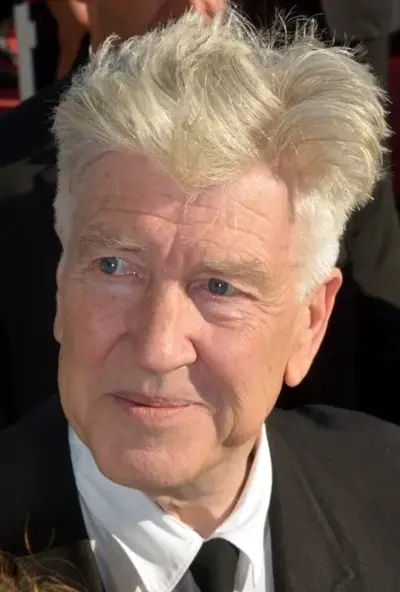
David Keith Lynch is an American filmmaker, painter, visual artist, musician, writer and occasional actor. A recipient of an Academy Honorary Award in 2019, Lynch has received three Academy Award nominations for Best Director, and the César Award for Best Foreign Film twice, as well as the Palme d'Or at the Cannes Film Festival and a Golden Lion award for lifetime achievement at the Venice Film Festival. In 2007, a panel of critics convened by The Guardian announced that 'after all the discussion, no one could fault the conclusion that David Lynch is the most important film-maker of the current era', while AllMovie called him "the Renaissance man of modern American filmmaking". His work led to him being labeled "the first popular surrealist" by film critic Pauline Kael.
